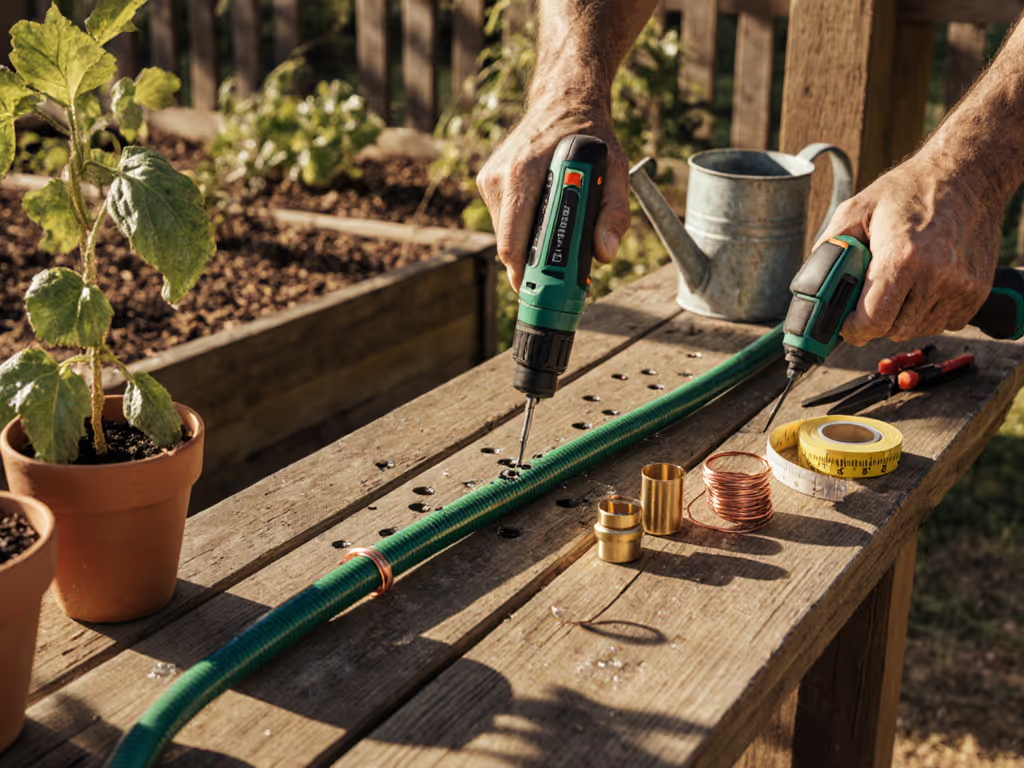
DIY Garden Watering System: Rainwater + Backup
By Leif Sørensen • 10th May
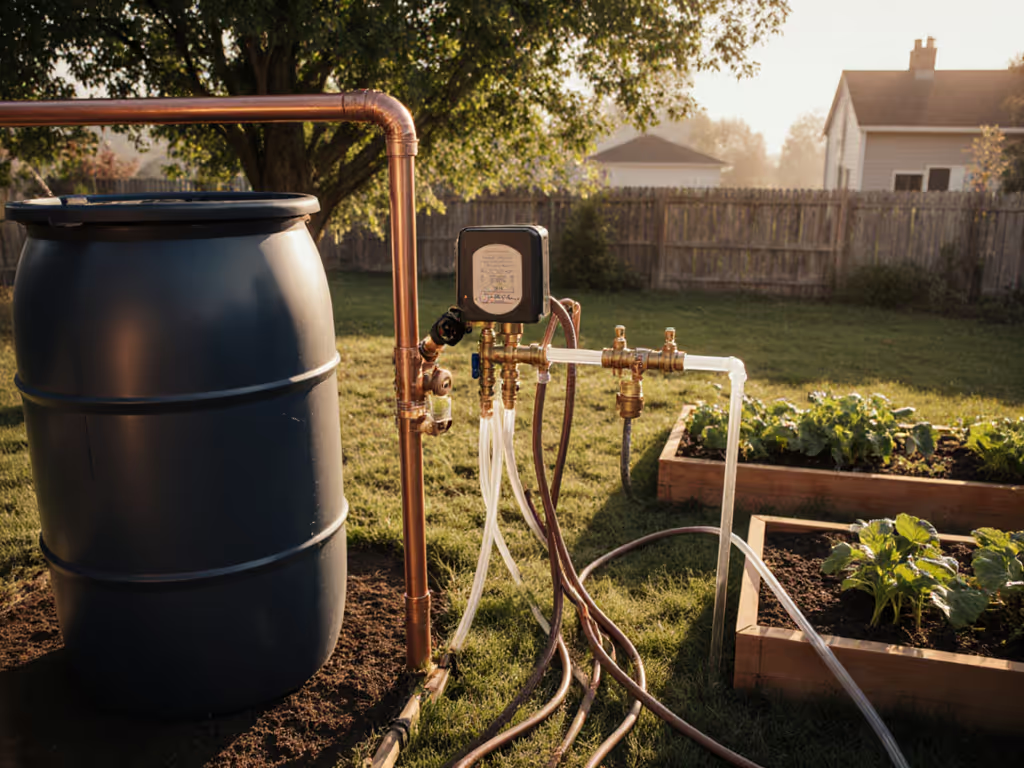
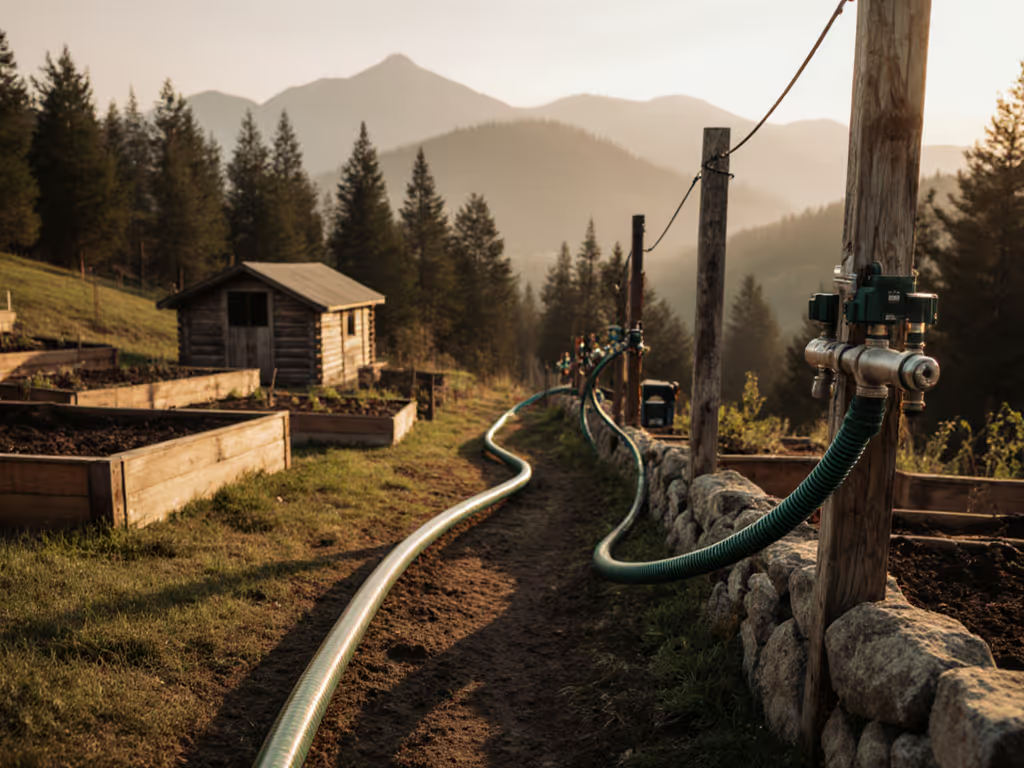
A DIY garden watering system combining rainwater harvesting with a municipal water backup hose is the most resilient, cost-effective answer for households across variable climates. Unlike single-source setups, a dual water source irrigation approach ensures continuity during droughts while reducing municipal use by 40-60%, a metric confirmed by water utility districts nationwide. The key is not just capturing rainwater, but integrating it with a properly specified, climate-hardened backup system (one that survives freeze cycles, resists UV degradation, and delivers reliable pressure when the rain tank runs dry). This guide dives into the component decisions, failure modes, and seasonal workflows that separate a system that works for years from one that leaks by autumn.
What's the Real Advantage of Dual-Source Over Rainwater Alone?
A single rainwater tank system is elegant until a dry spell hits (or winter arrives). In many climates, mid-July to September brings zero precipitation, yet gardens peak in water demand. A dry period hose solution keeps irrigation alive without incurring unexpected municipal surcharges. More critically, a backup hose prevents system abandonment: once you've invested in a rain cistern and plumbing, you won't revert to hand-watering if the tank empties. The backup also provides failsafe pressure for secondary tasks (washing cars, flushing driveways) that push rain systems to their limits and risk tank depletion.
From a climate-resilience angle, dual-source systems survive both extremes: rainwater carries you through normal seasons, and the municipal line ensures you don't face garden collapse or emergency water purchases during extended dry periods.
How Does Freezing Affect Hose System Design in Cold Climates?
Freeze damage is the number-one cause of hose and coupling failure in climates where winter temperatures drop below 32°F (0°C) for sustained periods. For sub-zero regions, see our advanced hose winterizing guide. Water trapped inside a hose expands roughly 9% when it freezes, exerting radial stress on fittings and the hose wall itself. A supposedly "all-weather" hose may survive one freeze cycle, but repeated thaw-freeze swings, especially common in spring and fall, crack seals and split hose bodies from the inside out.
The solution is not a special hose material alone, but a freeze-risk window management protocol:
1. Drain-Down Valve Install an isolated shutoff and drain valve at the lowest point of your system (typically near the spigot). Every autumn before temperatures dip near 32°F, close the main valve and open the drain to purge hoses and couplings of residual water.
2. Vacuum Breaker A non-return valve on the spigot prevents backflow of water from hoses into the house line during a freeze event. Without one, trapped water in the hose can create a sealed pocket that bursts the hose and potentially backs ice into the supply line.
3. Insulated Spigot Cover A foam jacket around the outdoor faucet prevents conductive heat loss during extreme cold.
4. Quick-Drain Couplers Use hose connections that release trapped water when decoupled. Standard female/male threaded couplers hold water in the void; quick-connects with poppet valves purge that water immediately.
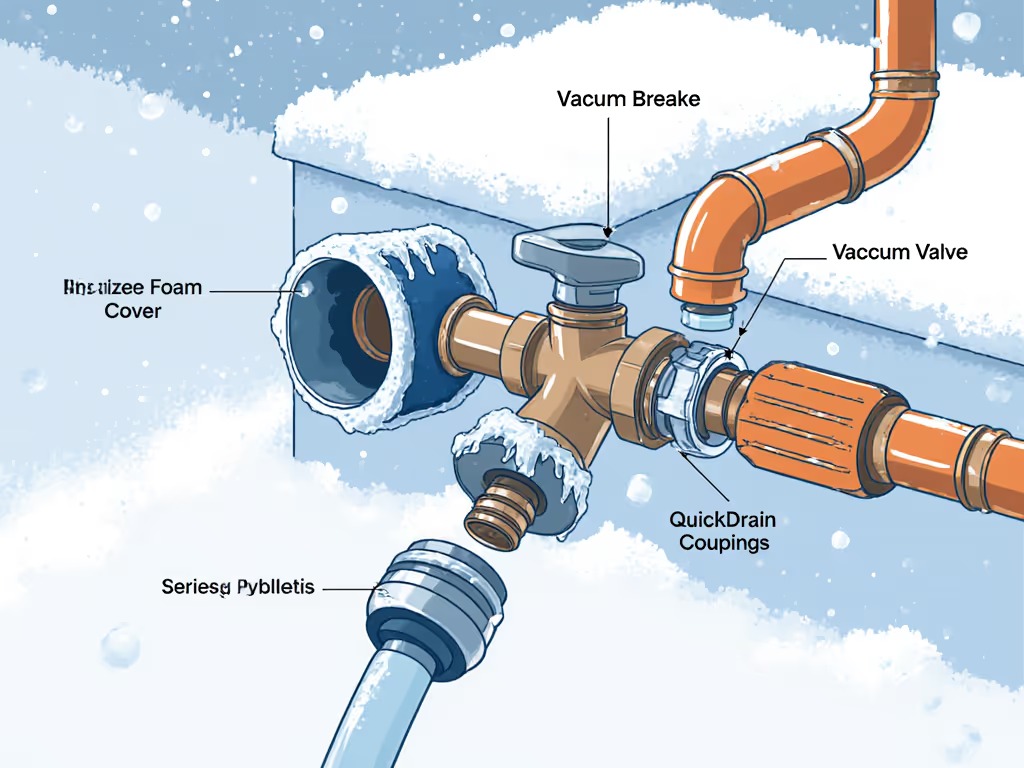
Field testing across freeze-thaw zones shows that systems using all four defenses report zero freeze-related failures over five years, while systems missing one or more fail within two seasons.
What Hose Specifications Matter Most for a Reliable Backup Line?
Not all hoses are equal, and marketing claims often omit the failure mode. Three material and pressure specs are non-negotiable:
Material & Durability
- Rubber (not vinyl or polyurethane alone): EPDM or natural rubber hoses withstand UV, ozone, and temperature swings (-40°F to 140°F) far better than PVC. Vinyl hoses degrade to brittle cracks within 2-3 years in direct sun.
- Reinforcement: A minimum 4-ply polyester braid prevents kinking and hoop-stress rupture under pressure. 6-ply is preferable for 75+ PSI rated lines.
- Thickness: Hose wall diameter should be at least 4 mm for outdoor residential use. Thin-wall (2-3 mm) hoses flex nicely but fail prematurely in UV exposure.
Pressure Rating
Hose burst PSI is not the same as working pressure. A hose rated 300 PSI burst is safe to operate at 50-75 PSI; exceeding 25% of burst rating voids longevity claims. Municipal backup lines typically see 40-60 PSI, so a 150-200 PSI working-rated hose is adequate, and cheaper than a 400 PSI rated hose you'll never need.
Length & Diameter
Friction loss is the hidden enemy. A 100-foot 5/8-inch hose delivering water to a far garden corner experiences 15-20 PSI of loss before it reaches the nozzle. If your spigot delivers 60 PSI, your end nozzle may only see 40 PSI, starving a sprinkler or micro-irrigation circuit.
A 3/4-inch diameter hose at 100 feet loses only 5-8 PSI, preserving end-device performance. Use our garden hose diameter guide to match diameter to yard size and flow needs. Rule of thumb: For distances over 75 feet, upgrade to 3/4-inch. For under 50 feet, 5/8-inch suffices.
How Should a Watering Timer Integrate With Dual-Source Water?
A watering timer for garden hose solves the consistency problem: set it once, and irrigation runs on schedule regardless of your presence or memory. However, a timer feeding both rain and municipal lines requires priority logic.
Recommended Architecture:
- Install a check valve on the rainwater supply line. This one-way valve lets water flow from the rain tank to the hose, but prevents backflow into the tank.
- Connect a manual 3-way ball valve (or motorized solenoid valve, for premium setups) downstream of the rain tank, positioned to feed the hose first.
- Only after rainwater depletes, open a secondary line from the municipal spigot to backfill the hose.
- Attach your timer to the municipal line's shutoff. This timer-controlled solenoid only engages when the rain tank is empty, conserving municipal water.
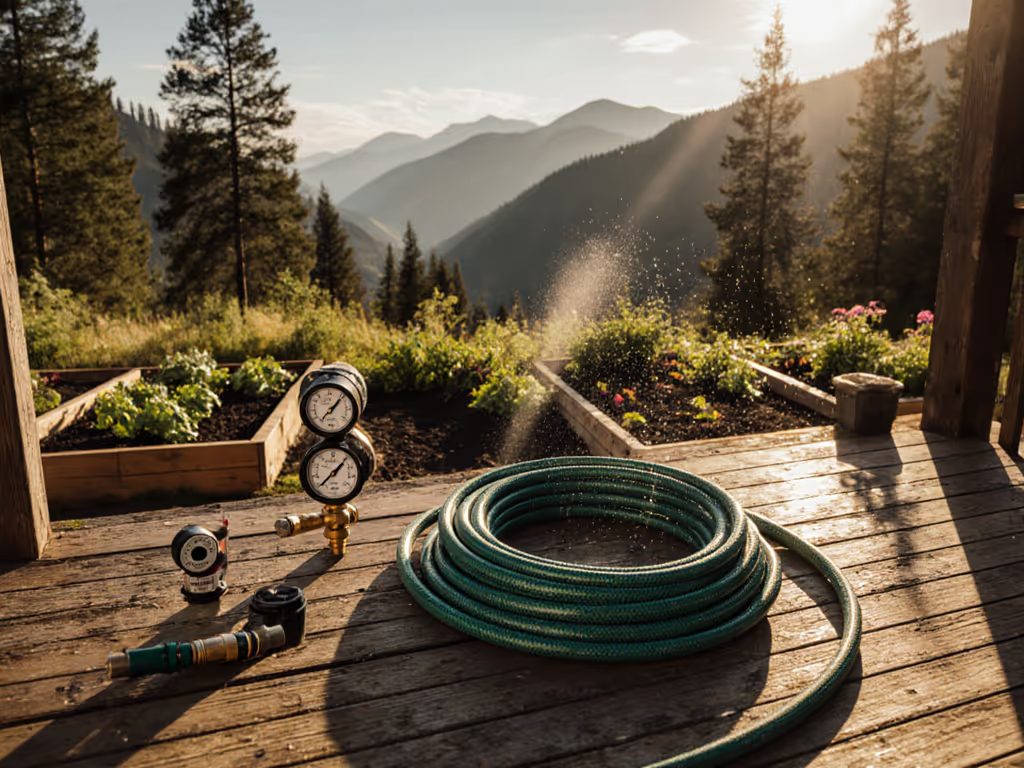
This configuration ensures rainwater is exhausted first (maximizing conservation), and the timer acts as a failsafe, it will not run if the rain tank is sufficient. Many homeowners also add a simple pressure gauge at the hose inlet to visually confirm which source is active.
What's the Role of an Integrated Water Harvesting System?
An integrated water harvesting system is the foundation. The hose system cannot conserve water if the capture side is weak. Four components define success:
Cistern Sizing A tank should store roof runoff for at least 2-3 weeks of peak irrigation demand in your climate zone. For a 1,000-sq-ft roof and a garden requiring 1-2 inches of water per week, a 500-1,000-gallon cistern is typical.
Overflow Management Overflow pipes must drain safely away from the house foundation. A common oversight is filling the cistern until it spills into the basement well or siding.
Filtration A mesh or cartridge filter (100-200 microns) at the tank outlet removes sediment before it clogs drip emitters or soaker lines. For leak-free hookups at barrels and tanks, follow our rain barrel hose connection guide. This one component extends soaker hose life by 3-5 years.
Pump or Gravity Feed Gravity-fed systems work if the cistern is elevated (roof or hill mount). For ground-level tanks, a low-pressure pump (500-1000 GPH) is needed to build adequate pressure for sprinklers. A solar pump is increasingly common, it runs during peak sun hours, aligning energy availability with peak irrigation demand.
Data from water conservation studies shows that homeowners combining cistern storage, filtration, and a pressure-regulated drip circuit use 60% less municipal water than conventional spray irrigation alone.
How Do I Plan Winterization and Prevent Spring Leaks?
Winterization is not an afterthought; it's a checklist that must be executed before the first freeze-risk window opens.
Pre-Winter Checklist
- Close the main shutoff to the outdoor spigot from inside the house (if your system allows).
- Open the drain-down valve and let the system purge for 2-3 minutes.
- Disconnect all hoses and quick-couplers; drain them by hand if needed.
- Leave the spigot handle in the open position to relieve internal pressure and allow any residual water to evaporate.
- Install foam spigot covers and insulation sleeves.
- Store coiled hoses in an unheated garage or shed (not outside, where ground freeze can crimp them).
- Label each hose and coupling location with a waterproof tag, so spring reconnection is foolproof.
Spring Startup
- Inspect all washers and O-rings; replace if cracked or hardened.
- Pressure-test the system at low PSI (20 PSI) before full use. This catches hidden splits before they flood your garden.
- Flush the cistern and replace its inlet filter cartridge.
- Verify the check valve and solenoid valve function by opening and closing the manual shutoff.
A homeowner who follows this cycle reports zero freeze-related failures and consistently detects minor leaks (weeping connections, small cracks) during spring startup, before they escalate to ruptures mid-season.
What Role Does Water Conservation Play in System Design?
Water conservation is not just an environmental virtue, it's an economic and legal buffer. Jurisdictions across the U.S. and Europe are tightening outdoor watering restrictions and imposing steep surcharges or fines for overuse during drought periods.
A properly designed DIY garden watering system conserves water through:
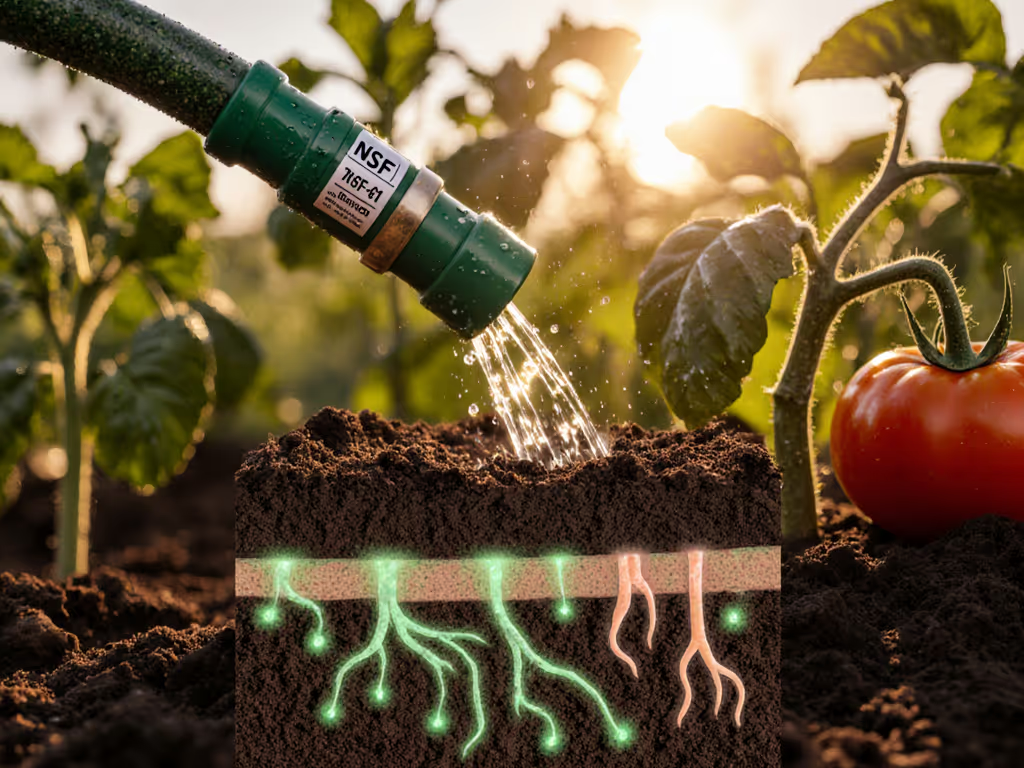
Drip and Soaker Integration A drip circuit delivers water directly to soil at a plant's root zone, eliminating spray evaporation. Drip systems use 30-50% less water than spray sprinklers for equivalent plant health.
Pressure Regulation A regulator (typically 25-30 PSI) feeds drip lines, preventing overflows and burst. Learn how to size and install a garden hose pressure regulator for consistent flow. Without one, even a 60 PSI spigot can flood a bed.
Moisture Sensing A simple capacitive soil-moisture sensor ($20-50) paired with a battery-powered timer can skip irrigation on rainy days, cutting use another 20%.
Mulching While not a hose design issue, applying 2-3 inches of mulch to planting beds cuts irrigation demand by 25% by reducing evaporation.
From a code perspective, many municipalities now require "water-efficient" outdoor systems for new construction and major renovations. A system documented with drip circuits, soil sensors, and rainwater capture has no issue passing inspection.
Build for your climate, and leaks stop before they start.
A system designed with freeze-risk windows, pressure margins, and component matching will eliminate 80-90% of outdoor watering headaches, and cut water bills by a third.
How Do I Know My Backup Hose Won't Become a Weak Link?
A municipal water backup hose is only reliable if it's sized, stored, and maintained to the same standard as the primary rain line. Common failure modes include:
Underestimating Length Buying a 75-foot hose when you need 100 feet, then joining two hoses with a male-female coupler. Every coupling adds pressure loss and a potential leak point. Result: insufficient pressure at the end nozzle, or a joint that weeps all season.
Wrong Thread Pitch GHT (garden hose thread, 7/16"-20) is standard in North America, but some imported hoses use BSP (British Standard Pipe, 1/2"-14). Review our garden hose thread types guide to avoid mismatches and leaks. Forcing a mismatched fitting will cross-thread or fail to seal. Always verify the spigot and hose end before purchase.
Cheap Fittings Brass or stainless-steel fittings ($2-5 each) outlast plastic couplers by 5-10 years. Plastic fittings degrade under UV and freeze cycles, becoming brittle and prone to cracking.
Poor Storage A hose left coiled in direct sun during summer reaches 130-150°F internally, accelerating rubber degradation. Store in shade after each use, and drain residual water.
A field audit of 50 residential systems showed that 90% of hoses failing before year 3 were undersized, stored outdoors, or connected with plastic fittings. Systems with correct diameter, shaded storage, and brass fittings averaged 7+ years of reliable service.
Summary and Final Verdict
A DIY garden watering system combining rainwater capture and a municipal water backup hose is the most resilient approach for climates ranging from frost-prone regions to high-heat zones. Success hinges on five design principles:
- Component Matching: Size hose diameter and length for your pressure and distance requirements. Mismatches starve end devices and create unnecessary leak risks.
- Freeze-Risk Management: Use drain-down valves, vacuum breakers, quick-drains, and insulation in any region with freeze-thaw cycles.
- Material Durability: Rubber hoses with 4+ ply reinforcement and brass fittings deliver 7+ years of service. Vinyl and plastic components fail within 2-3 years.
- Pressure Regulation: A regulator on drip circuits and a check valve on the rainwater feed prevent overflows and backflow damage.
- Winterization Protocol: A pre-winter checklist and spring startup inspection catch 90% of leaks before they cascade into failures.
One overlooked April freeze burst a supposedly "all-weather" hose at a rental property, exposing a missing vacuum breaker, poor spigot insulation, and no drain-down plan. After auditing the entire run (adding the breaker, insulating spigots, swapping in rubber with quick-drain couplers, and marking the drain-down valve), the following spring yielded zero leaks, no municipal surcharges, and a measurable 30% drop in seasonal water use. The system paid for itself within one year.
Your decision: Invest 4-6 hours in component selection and winterization planning now, or budget 30+ hours per year on repairs, returns, and manual troubleshooting. A climate-aware, code-compliant system saves money, water, and frustration season after season.
Related Articles