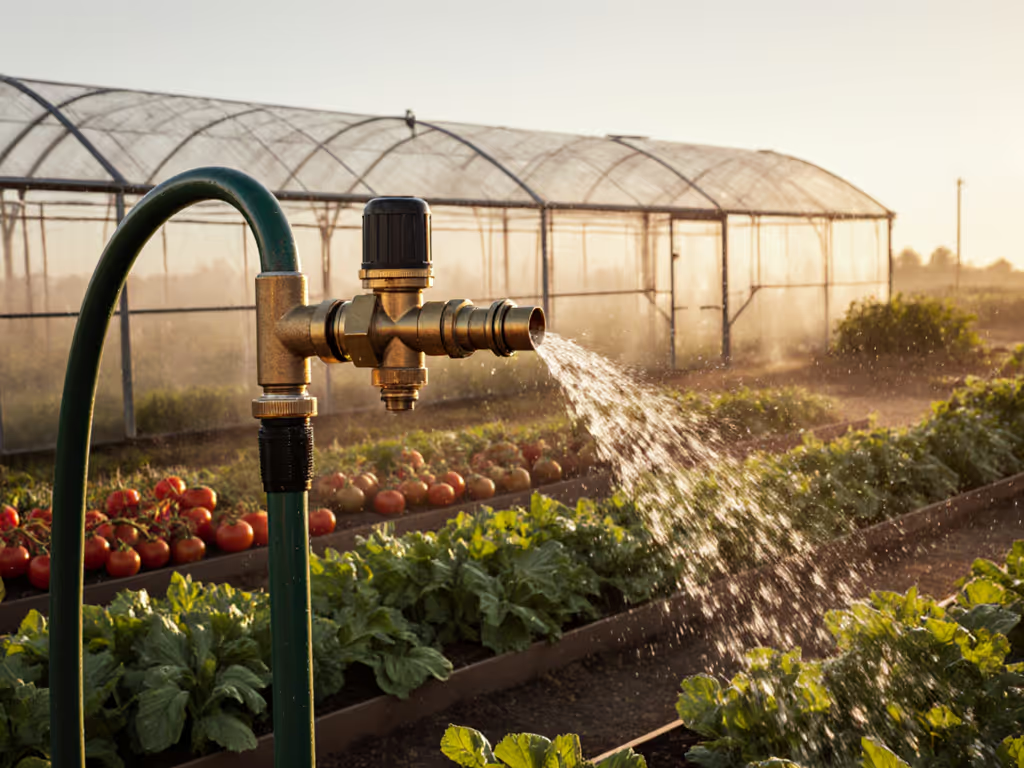
Best Garden Water Hoses: Urban Farming
By Marco Alvarez • 11th Mar

Selecting the best garden water hose for urban farming requires more than impulse buying or grabbing whatever's on clearance. A watering hose becomes your infrastructure: it either sustains your raised beds and potted edibles season after season, or it becomes a rotating chore that eats time and money. I've spent enough summers learning this lesson the hard way that I can save you from repeating it.
The truth is stark: friction-averse setups demand thought upfront. Buy once, configure right, keep the water and time in. Below, I've laid out a numbered checklist of selection criteria and product categories that separate dependable hoses from the ones destined for the donation pile.
1. Start with Burst Strength and Real-World Durability
Burst PSI is not peak performance - it's a safety limit. For high-volume urban farming and raised garden beds watering systems, what matters is working pressure and how long the hose stays intact under daily use.
Commercial-grade rubber hoses deliver 500-600 PSI burst strength with brass couplings that don't weep after one season. These aren't luxury items; they're insurance against the bargain-hose churn I experienced years ago, when I cycled through two plastic-reeled models and a leaky mess of mismatched quick-connects across three summers. The upfront cost stung, but the math shifted once I stopped replacing washers and buying patch kits.
Polyurethane-blend hoses (often marketed as "premium" or "agricultural") offer similar durability with lighter weight, critical if you're hand-dragging setups daily around beds or decks. These typically run $90-$175 for 50-100 feet, depending on diameter.
What to Check
- Minimum 500 PSI burst strength
- Brass or stainless couplings (never plastic quick-connects)
- Outdoor-rated reinforcement (fabric layer or spiral wrap)
- Temperature range: seek -40°F to 180°F if you're freeze-thaw exposed
2. Hose Diameter and Length: The Flow-Friction Tradeoff
Most residential hoses come in 5/8-inch or 3/4-inch diameters. Here's the practical split: 5/8-inch hoses work fine for raised beds, soakers, and drip-irrigation circuits where you don't need high volume. They're lighter and cheaper. 3/4-inch hoses maintain pressure over longer runs and feed multiple outlets simultaneously (essential for high-volume urban farming plots or when you're watering trees and beds at the same time).
Length matters too. A 50-foot hose loses less pressure than a 100-foot, but it won't reach the back corner. Measure your actual run (including turns and obstacles), then add 10-15 feet of buffer. Use our Optimal Hose Length calculator to dial in the right length for your layout. Undersizing length means adding couplers: each joint introduces a leak risk and pressure drop.
Friction Loss Reality
A 100-foot 5/8-inch hose can lose 10-20% of your flow rate by the far end under full throttle. For drip circuits targeting drought-tolerant crop irrigation, that's acceptable - drip tape operates at 15-30 PSI anyway. For soaker coverage of multiple beds, consider stepping up to 3/4-inch or breaking the layout into two shorter runs.
3. Kink Resistance: Test Claims, Don't Trust Marketing
Every hose claims "kink-free" or "kink-resistant." I've found the difference lies in construction materials, not marketing: helix-reinforced hoses resist coil memory better than ribbed or flat designs. Polyester outer layers (seen on pro-grade brands) slide across turf and corners without scuffing and store more neatly on reels.
The real test: can you pull the hose around a 90-degree corner under light tension without it creasing? If yes, it will perform. If it flattens or resists, you'll spend minutes unsnarling it each use. The "cheapest hour" you never spend matters here too.
4. Material Composition: Rubber vs. Polyurethane vs. Hybrid
Rubber hoses (often reinforced with nylon or canvas) are the workhorses. They handle temperature swings, UV exposure, and rough handling. Downside: heavier. A 75-foot rubber hose can weigh 15-20 lbs, fatiguing if you're hand-coiling or if physical strain is a concern.
Polyurethane blends (like Leonard's or Teknor Apex's premium lines) are engineered to be lighter while retaining burst strength. They resist abrasion and extreme cold better than rubber in some formulations. Cost is higher ($90-$175 for 50-100 feet vs. $50-$90 for standard rubber), but weight savings and durability often justify it.
Avoid all-plastic or vinyl-core hoses for reliable urban farming. They degrade under sun, lose flexibility in cold, and fail early. That's the cycle that taught me the value of mid-tier components built to last.
5. Quick-Connect Compatibility and Spigot Standards
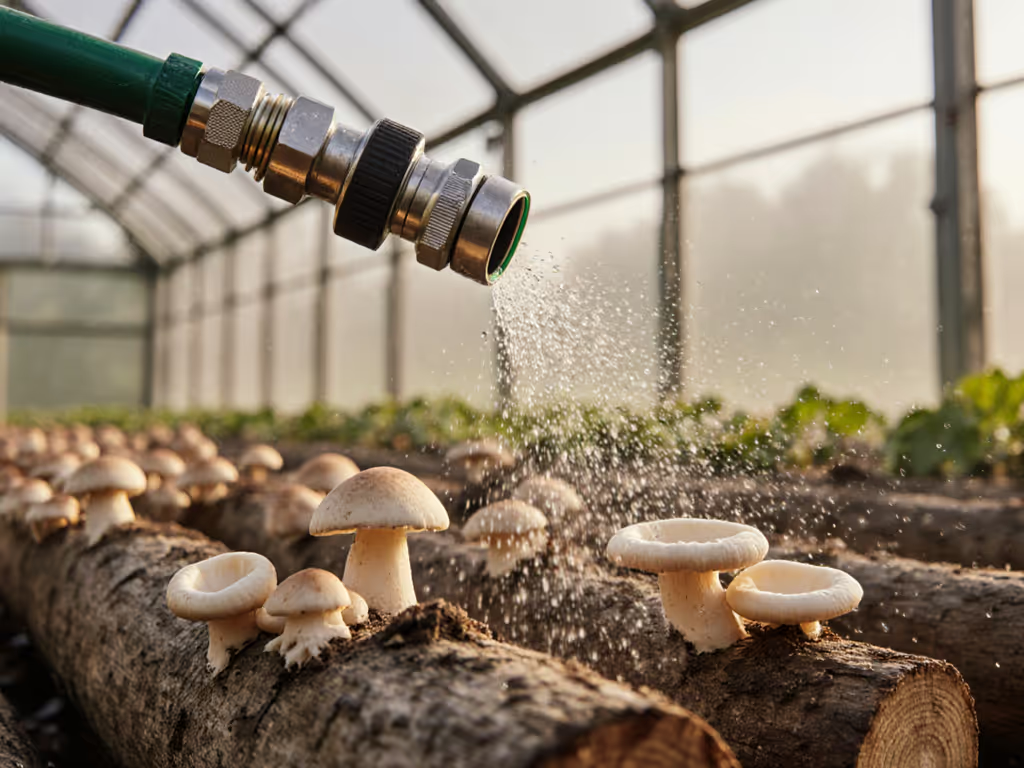
Urban plots often feature multiple spigots or shared water sources. Quick-disconnects (QDs) are a must for a no-fuss modular kit. The trap: brands use different thread sizes and sealing designs. If you're dealing with mismatched fittings, see our garden hose thread types and compatibility guide.
Standard garden-hose thread (GHT) is 3/4-inch NPT in North America. Most commercial hoses ship with this. But ensure your quick-connect set - and any Y-splitters, timers, or soaker lines - all use stainless-steel or brass bodies with O-ring seals, not washers alone. Washers work temporarily; O-rings stay sealed across multiple attach-detach cycles.
Brass couplings and stainless quick-connects cost 3-5 dollars more per piece but eliminate the leaky-connection frustration that haunts cheap kits.
6. Temperature Resilience: Freeze-Thaw and UV
If your region freezes, winter storage becomes critical. Water trapped in the hose expands and cracks the tube; water in reels can freeze the mechanism shut.
Commercial hoses rated to -40°F are engineered with softer rubber compounds that stay pliable in cold. But no hose survives water left inside during a freeze. Drain completely and store coiled indoors or in a heated shed.
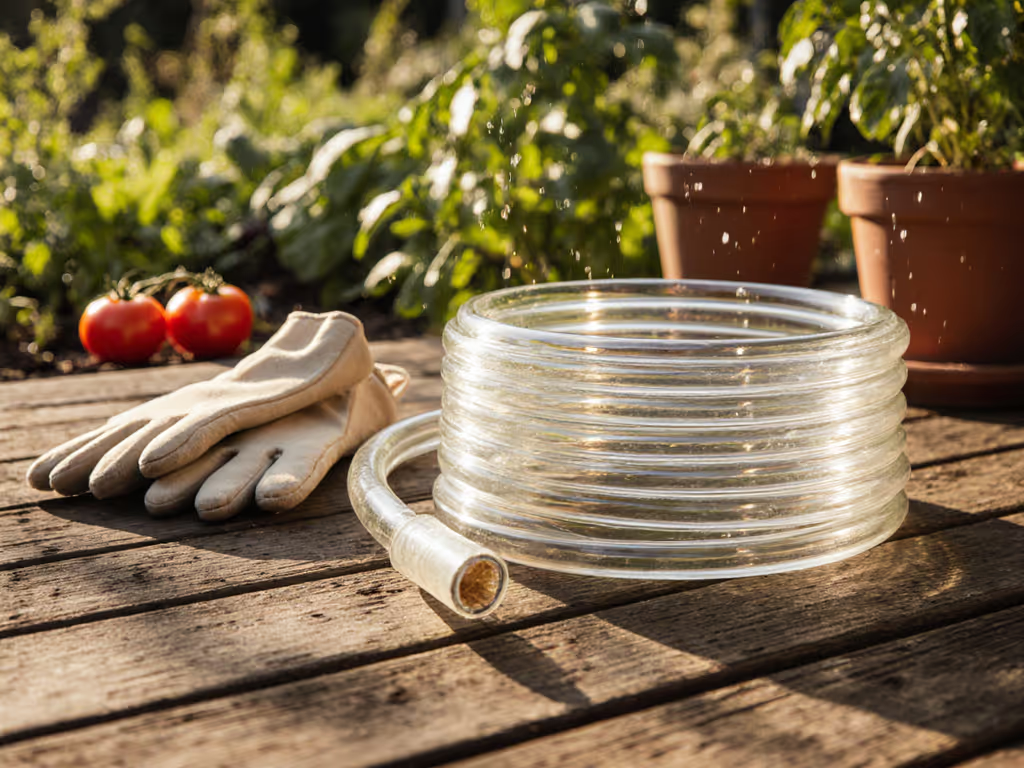
UV exposure (especially in high-altitude or southern zones) degrades hose walls over time. Darker rubber (black or dark green) lasts longer than translucent or light-colored tubes exposed to direct sun. Store hoses out of sunlight when not in use.
Winter Readiness Checklist
- Drain and coil hose immediately after use in cold months
- Use a wall-mounted hanger or enclosed reel, never leave in sun
- Cap both ends to prevent frost entry
- Disconnect any timers, soakers, or quick-connects before storage
7. Pressure and Flow Requirements for Drip and Soaker Lines
Urban farming often pairs hoses with commercial seed starting hose equivalents: soaker tape, drip emitters, or micro-sprinklers. These are pressure-sensitive.
Standard drip systems operate at 20-40 PSI. Soaker hoses at 15-30 PSI. Over-pressure floods beds unevenly; under-pressure starves them. A 100-foot hose at full tap flow can lose enough PSI that the far end of a soaker line dries out.
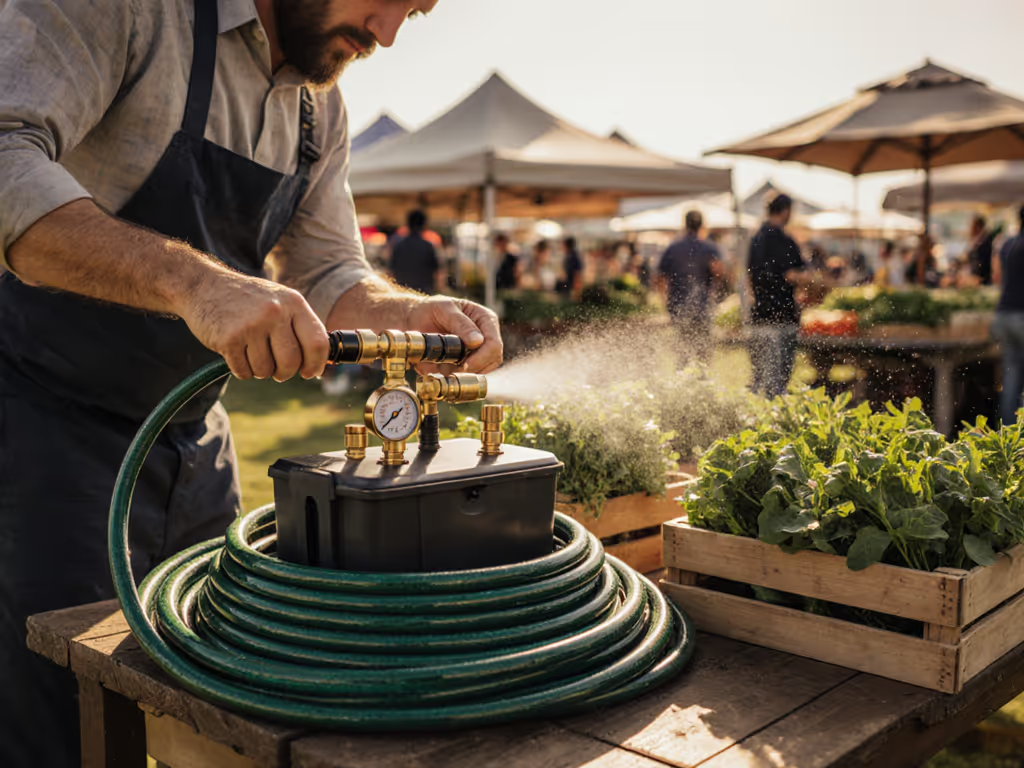
Solution: Use a pressure-regulating timer at the spigot (set to 25-30 PSI) and match hose diameter to your system. For raised garden beds watering system with multiple beds, a no-fuss modular kit includes a 3/4-inch main run from the spigot to a manifold with regulators and quick-disconnect outlets for each bed's soaker or drip line.
Brass regulators add $15-$30 but transform a flood-or-starve layout into controlled, efficient watering. We tested the top options in our garden hose pressure regulators comparison.
8. Potable Water and Food-Safety Considerations
If you're watering edibles, especially in urban gardens where soil might hold residue, your hose composition matters. Some cheaper hoses off-gas plasticizers or retain chlorine taste.
Seek hoses explicitly labeled potable-safe or drinking-water rated. Learn why this matters for edibles and family use in our drinking water-safe hose guide. These meet NSF or WaterMark standards and use food-safe inner tubes and couplings (typically silicone or EPDM rubber, not PVC). They cost 20-30% more but are non-negotiable if children, pets, or raw-harvest edibles are in the picture.
9. Nozzle and Shutoff Ergonomics
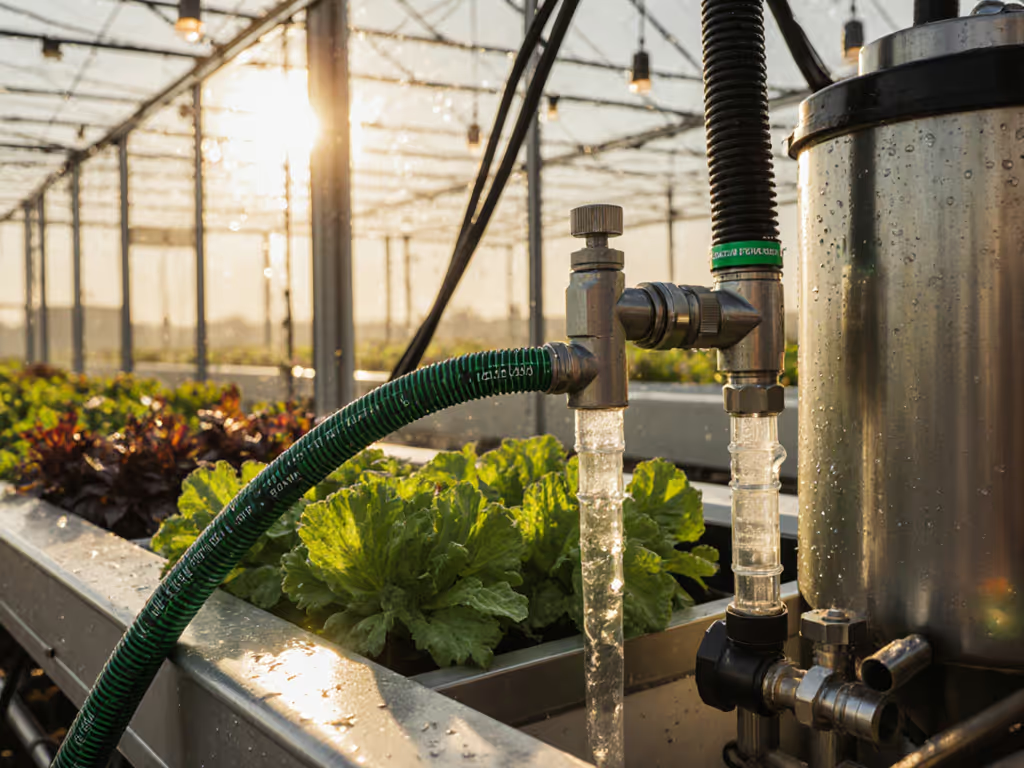
Fine-mist and soaker nozzles are tempting; in practice, most fail within a season or cause hand fatigue from stiff triggers. Brass shutoff valves with smooth levers outlast plastic pistol-grip nozzles by years.
For urban plots, a simple brass ball valve at the spigot ($8-$15) plus interchangeable nozzle attachments is more durable than an all-in-one gimmick. Swapping nozzles takes five seconds and you avoid the fatigue trap.
10. Reel and Storage: Mounted vs. Portable
Wall-mounted steel or metal reels ($25-$60) eliminate tangles, protect the hose from UV and ground moisture, and keep the yard clutter-free. They're friction-averse by design: smooth cranks, wide drums to prevent kinking.
Portable carts work if you're mobile between beds or properties, but cheaper plastic reels bind and warp. If you reel, invest in a metal frame with wide-slot guides to prevent pinching the hose.
Do not leave hoses coiled on the ground. Abrasion, UV, pest damage, and water pooling shorten life dramatically.
11. Total Cost of Ownership: The Long-View Math
Here's the analysis that sold me on mid-tier components:
Bargain Route ($25-$40 hose, plastic quick-connects, plastic reel)
- Year 1: hose fails or splits; one replacement + washers + connectors = $50-$70 more
- Year 2: plastic reel cracks; new hose needed; total spent = $120-$150
- Year 3: repeat cycle
- 3-year total: $180-$250, plus repeated setup time and frustration
Mid-Tier Route ($90-$120 commercial hose, brass couplings, metal reel)
- Year 1: upfront cost ~$140-$160
- Year 2-3: occasional washer replacement ($2-$5); no major failures
- 3-year total: ~$150-$170, with far fewer returns to the shed and zero wasted hours troubleshooting leaks
The mid-tier choice wins on hours saved alone. The cheapest hour is the one you never spend redoing.
12. Actionable Next Steps: Build Your No-Fuss Kit
Quick Checklist
- Measure your primary watering run (spigot to farthest bed), add 15 feet for buffer
- Choose diameter: 5/8-inch for single-bed soaker circuits; 3/4-inch for multi-outlet layouts
- Select hose type: Commercial rubber (durability) or premium polyurethane (lighter weight). Burst strength minimum: 500 PSI. Temperature range: at least -20°F if in freeze-thaw zone
- Pick couplings: Brass or stainless; O-ring sealed. Avoid all-plastic QDs
- Add infrastructure: Brass ball valve at spigot ($10-$15), pressure regulator ($20-$30), metal wall reel or cart ($30-$60)
- Store smart: Coil indoors or in shaded shelter after every use; cap both ends in winter
- Keep consumables on hand: Extra washers, O-rings (assorted sizes), Teflon tape, and a spare hose-end connector
First Deployment
- Attach hose to spigot with a stainless washer and Teflon tape (three wraps)
- Test flow at full pressure for one minute; tighten any weeping connections
- Coil smoothly onto the reel without forcing; crimps now mean splits later
- Label your setup (hose diameter, length, spigot location) so family members don't yank it around corners
The upshot: A best garden water hose for urban farming is not the cheapest option or the shiniest brand. It's the one engineered to stay intact under your specific climate, diameter matched to your plot layout, coupled with stainless quick-connects and stored off the ground. That hose (combined with a simple checklist and a wall reel) pays for itself in hours saved and eliminated returns. Buy once, configure right, keep the water and time in.
Related Articles