Water Filter Garden Hose: Compatibility Tested
By Priya Nandakumar • 6th May
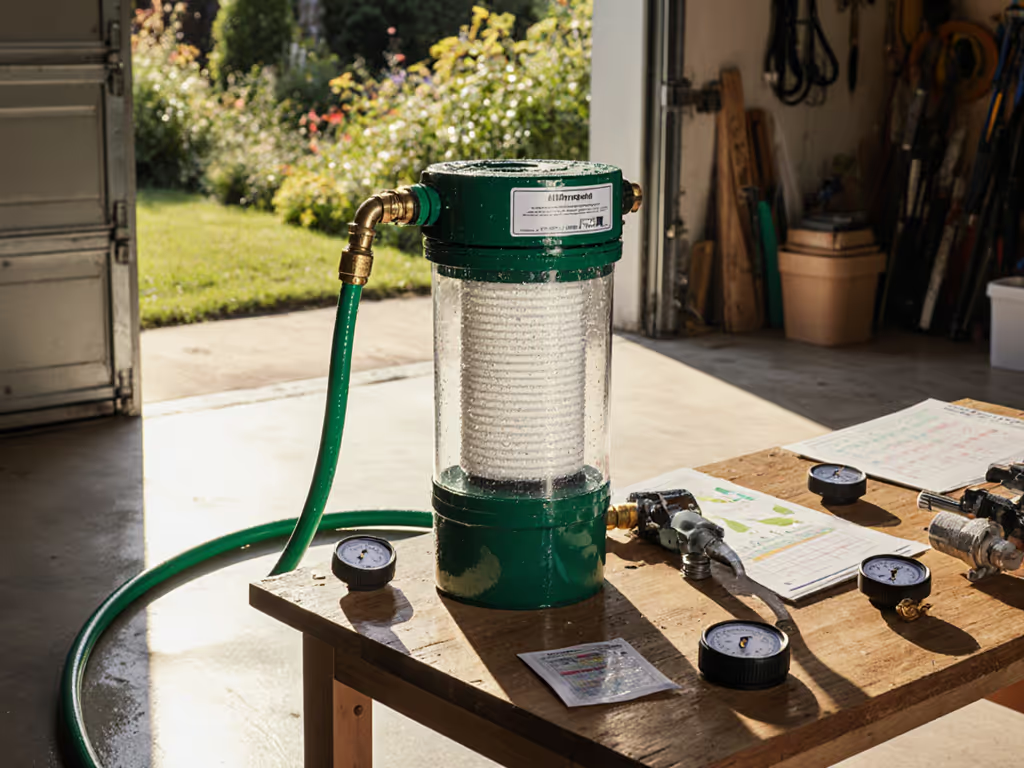
When gardeners talk about water quality, they rarely account for delivery. A water filter garden hose is not a single device. It is a system. Whether you're running a reverse osmosis line to a raised bed or installing a water filter for water hose directly at the spigot, pressure stability and component fit determine success. If PSI terms are new, start with our garden hose PSI ratings guide to baseline your system. I've tested hundreds of combinations under load. What you discover is simple: filtration adds resistance; resistance demands exact hose sizing, full-flow fittings, and a compatibility matrix that accounts for hose diameter, filter type, fitting threads, and target GPM. Let's work through the decisions.
FAQ: Water Filter Garden Hose Systems
How does filtration change hose requirements?
Filtration media (activated carbon, sediment screens, or RO membranes) creates pressure drop. A typical under-sink carbon filter introduces 3-8 PSI loss at full flow. An RO system can impose 15-25 PSI reduction on a standard 3/4-inch line.
Why this matters: If your spigot delivers 60 PSI and you need 20 PSI at the nozzle to fill a soaker circuit, the hose and filter combination must not steal more than 40 PSI. Most gardeners don't measure this. I do.
Practical thresholds:
- Standard hose + carbon filter: typically viable (drop ≤ 8 PSI)
- Standard hose + RO line: often marginal; may starve soakers or timers below 15 PSI threshold
- Oversized (5/8-inch) hose + RO line: reliably delivers > 20 PSI at distance
This is why we measure flow at the spigot; design back from the task. To keep flow consistent after adding filters, consider an inline garden hose pressure regulator matched to your target PSI.
What is an RO system hose compatibility check?
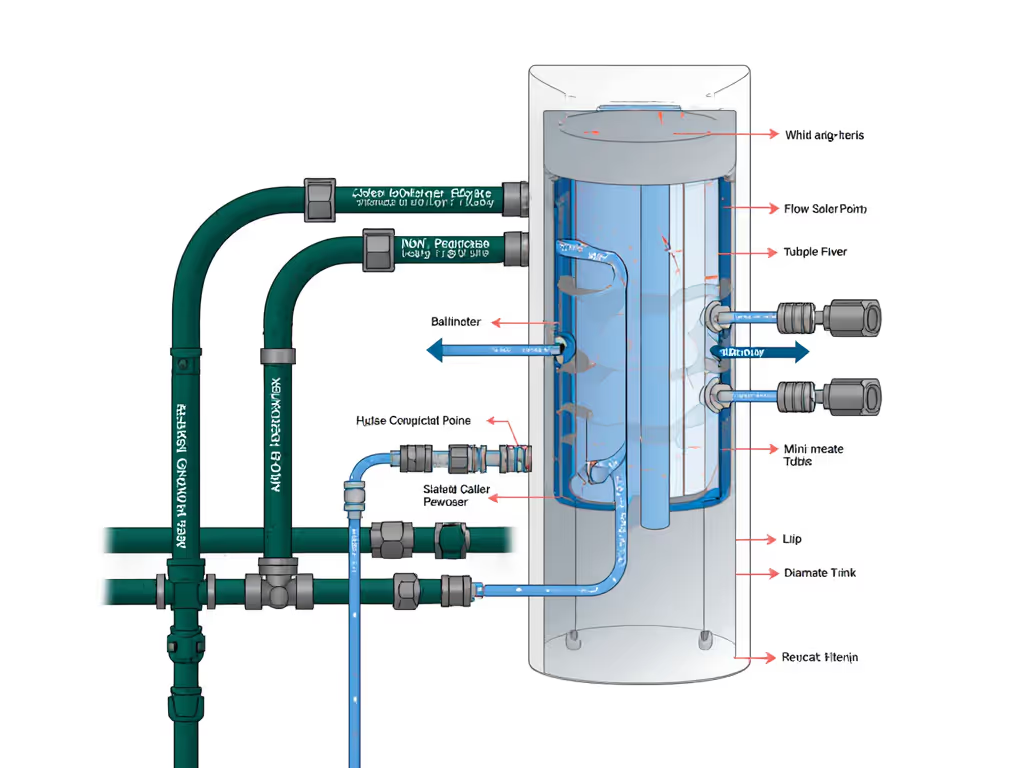
Reverse osmosis (RO) systems branch into potable-line (permeate) delivery and waste-line (brine) disposal. The permeate line is the one gardeners tap for edibles. Not sure which threads you have? See our garden hose thread types guide to prevent leaky mismatches.
RO hose specs:
- Supply line: 1/2-inch or 3/4-inch input, thread: GHT (garden hose thread) or 3/4-inch NPT, depending on unit
- Permeate output: typically 1/4-inch or 3/8-inch tubing (mini-bore), not full-bore
- Pressure requirement: RO systems need minimum 40-60 PSI inlet to produce usable flow; below that, output slows dramatically
Compatibility matrix for RO + garden hose:
- Confirm RO unit's input thread (GHT female or NPT male)
- Verify your spigot thread (nearly all U.S. spigots are GHT female 3/4-inch)
- Connect RO input hose to spigot with correct adaptor
- Route RO permeate line (mini-bore tubing) to garden or storage vessel
- Do NOT connect permeate line directly to a full-size garden hose without a pressure buffer or storage tank. Flow mismatch will occur.
The mistake I've seen: gardeners buy an RO system, connect its 1/4-inch output to a 3/4-inch garden hose with a wedge adaptor, then wonder why flow is 0.5 GPM instead of 3 GPM. The hose and output tubing diameter mismatch creates bottleneck; adaptors can't overcome physics.
What is filtered water gardening, and how does it differ from standard watering?
Filtered water removes sediment, chlorine, and (with RO) dissolved minerals. Standard municipal water contains 200-500 PPM total dissolved solids (TDS); RO reduces that to < 50 PPM.
When filtered water gardening matters:
- Vegetable beds with edible crops sensitive to chlorine (herbs, tomatoes)
- Acid-loving plants (blueberries, rhododendrons) that suffer from hard-water mineral buildup
- Ponds or fish tanks requiring dechlorination
- Sensitive seedlings in containers where nutrient balance is controlled
When it doesn't change hose selection:
- Most lawn irrigation tolerates chlorine and minerals
- Non-edible ornamental beds are indifferent to TDS
- Standard hose integrity doesn't improve with filtered input; hose wear is still driven by pressure, UV, and kinks
The honest truth: Filtered water gardening is about water chemistry, not hose durability. But the plumbing must match the flow demand of filtration, or the whole system throttles. That's where the compatibility matrix comes in.
What is a pH-balanced water hose, and do I need one?
"pH-balanced hose" is marketing jargon. Hose material (EPDM, nitrile, vinyl, rubber) has inherent pH behavior, but once chlorinated municipal water passes through, the hose doesn't re-balance pH. What matters for pH stability:
- Carbon filter: removes chlorine (which acidifies), slightly raising pH
- RO system: removes everything, outputting near-neutral water; you then add remineralization cartridge to target pH 6.5-7.0
- Hose itself: contributes negligibly to pH once water is in transit
Standard rubber (EPDM) hoses are neutral-stable over the pH range 4-9. Vinyl hoses can leach acetates if pH drops below 3 or rises above 10, but you won't hit those extremes in a garden system.
Spend on what matters: A quality filter with remineralization, not a "pH hose." Measure input pH and output pH with a meter (< $20); trust data.
How do I choose the right hose diameter for a filtered system?
Hose diameter determines friction loss per foot of run. For data on small-bore tradeoffs, compare 1/2 inch vs 5/8 inch hose flow rates. Here's the tested benchmark:
| Hose Diameter | Flow Rate | Friction Loss (per 50 ft) | Recommended Distance |
|---|---|---|---|
| 1/2-inch | 9 GPM | 12-18 PSI | < 25 ft (spigot to task) |
| 5/8-inch | 17 GPM | 4-6 PSI | < 75 ft |
| 3/4-inch | 23 GPM | 1-2 PSI | < 150 ft |
For filtered water systems:
- RO unit at spigot, garden 30 ft away: use 5/8-inch hose to RO unit, then route RO permeate (1/4-inch or 3/8-inch mini-bore) to soaker circuit or secondary tank. Do NOT compress mini-bore onto garden hose.
- Carbon filter in-line: connect to 3/4-inch main hose; filter adds 3-8 PSI. If your run is > 75 ft, upsize to full 3/4-inch throughout.
- Pressure-regulated drip systems downstream: maintain minimum 20-30 PSI at the regulator inlet. If your filter + hose loses > 20 PSI, you'll starve the drip circuit.
The task drives diameter. Not the filter.
What maintenance does a filtered hose system need?
Filtering adds maintenance touch-points:
- Filter cartridge life: Carbon filters typically last 3-6 months (500-2,000 gallons, depending on sediment load). RO membranes last 2-3 years. Replace per manufacturer schedule or water quality degrades and pressure drop increases.
- Connection seals: Mini-bore fittings (common on RO lines) use barbed push-fit or compression rings. These need re-seating every spring if hose has contracted in cold storage. I've seen brine leaks from loose fittings that went unnoticed until a reel overflowed.
- Hose material compatibility: Some carbon filter housings are plastic and UV-degradable if left in sun. Route filter unit in shade or under a weatherproof enclosure.
- Winterization: Drain filter cartridges completely before frost. Trapped water inside filters will freeze, crack the housing, and render the filter unusable. Drain permeate lines too. Mini-bore tubing splits easily.
- Sediment pre-filter: If your source water is high-sediment (well, pond), add a 100-micron pre-filter before the main filter. This extends carbon cartridge life by 3-4x and keeps mini-bore lines from clogging.
How do I verify potable water safety for edibles?
Potable water hose certification matters for vegetable beds and fruit trees. Standard garden hoses may contain BPA, phthalates, or lead-containing brass fittings. Certified potable hoses meet NSF/ANSI 61 (lead content < 0.25%, no BPA, food-safe plasticizers).
Practical checks:
- Buy hose with NSF 61 or WaterMark (Australia) label; check the packaging or manufacturer website.
- For drip irrigation into edible beds, specify NSF-certified tubing.
- If using filtered water (carbon or RO), the filter's output quality is good; the hose carrying permeate just needs to avoid leaching. NSF 61 hoses + carbon-filtered input = reliable baseline.
- Taste and odor: Carbon filters remove chlorine flavor. After first run, fill a glass from the garden hose; no off-taste = safe signal. (Not definitive; a lab test is authoritative, but taste is a practical screening.)
Cost tradeoff: NSF 61 hoses cost 15-30% more than standard. For edibles, the spend is justified. For lawn sprinklers, it's optional.
What's the difference between RO system hose compatibility and standard garden hose compatibility?
Standard garden hoses are designed for pressure delivery: 3/4-inch bore, GHT threads, rated 50-100 PSI burst pressure, flexible EPDM rubber, designed for kink-resistance over a range of diameters and coil tensions.
RO system hoses are designed for low-flow, low-pressure chemistry: mini-bore tubing (1/4-inch or 3/8-inch), compression or barbed fittings, rated 10-30 PSI, rigid plastic or reinforced tubing, designed for point-to-point routing without loops or kinks.
When they don't mix:
- Connecting RO permeate line directly to a full-size garden hose via adaptor: possible mechanically, but creates pressure bottleneck and turbulent flow. The system works, but at 30-50% reduced output.
- Using standard garden hose as RO supply line without proper regulator: RO systems prefer steady 50-60 PSI input. If garden hose pressure fluctuates (spigot on full blast, then dialed back), RO output pressure becomes erratic and membrane life shortens.
Best practice: Keep RO input on dedicated line (3/4-inch garden hose, unshared with lawn tasks), and route RO permeate separately into a storage tank or soaker circuit. This isolates chemistry from pressure swings.
Conclusion: Design From the Spigot Backward
A water filter for water hose system only works when every component is matched to the downstream task. I've traced premature failures and disappointing flow rates to misaligned hose diameters, undersized fittings, and filter cartridges that weren't sized for the intended flow. The pattern is always the same: someone buys a filter and a hose separately, assumes they'll work together, and discovers a 12 PSI drop or a starved sprinkler circuit only after installation. (I've been there. One spring I plumbed my patio with gauges at the spigot and the nozzle, then found a 12 PSI drop traced to a cheap kink under a pot. Swapping to a 5/8-inch rubber hose and a full-flow Y fixed it. The midnight soaker leaks finally stopped.)
Measure flow at the spigot; design back from the task.
Start with your task (edible-garden watering, potable supply, RO output to drip circuit), then work backward through filter type, filter fitting size, hose diameter, and spigot pressure. Build your compatibility matrix explicitly. Test one component at a time. Compare pressure at the source, at the filter exit, and at the nozzle. Only when all three points meet your threshold (typically ≥ 20 PSI at the nozzle) are you done.
Next Steps to Explore
- If you're installing an RO system, request the pressure-drop curve from the manufacturer and cross-reference with your hose friction-loss table (provided above).
- Invest in an inline pressure gauge ($3-5) and flow meter ($15-25); clip them to your spigot temporarily to baseline your water delivery.
- Map your yard: measure distances from spigot to each watering zone, then select hose diameter accordingly.
- For edibles, source NSF 61 hoses and specify the filter cartridge micron rating (100 microns for sediment, 0.01 micron for RO permeate) to match your water quality.
- Test your system in spring before the season; drain and store properly each fall.
Filtered water gardening and water purification gardening through hose systems are not luxuries. They are precision tasks. Treat them accordingly, and your system will run leak-free, pressure-stable, and true for years.
Related Articles