
Swivel Hose Connectors: Stop Kinks at Your Spigot
By Hana Kim • 3rd Mar
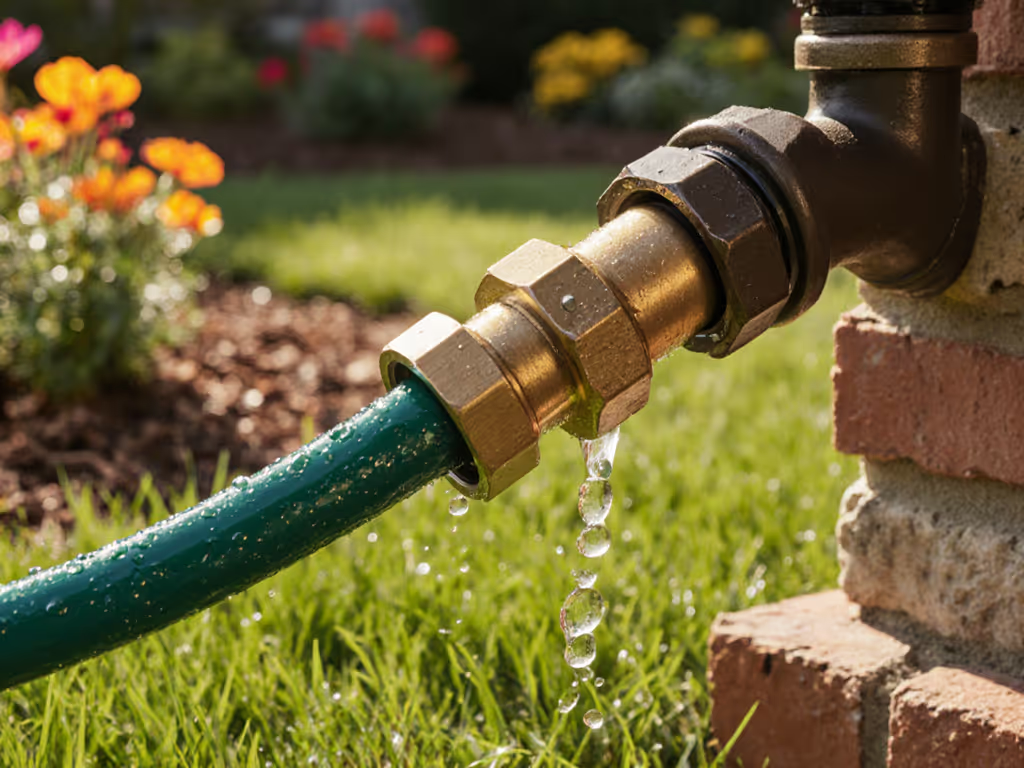
If you've spent half a Saturday untangling a twisted hose or watching water pressure drop to a trickle mid-watering, you already know that swivel hose connector technology solves a problem most people don't realize is fixable. A swivel hose connector, and garden hose swivel technology in general, are engineered to let your hose rotate freely, preventing the coil-memory twisting that cracks rubber, starves your sprinklers, and turns a quick garden chore into a frustration. This guide walks you through how they work, why they matter for your setup, and how to choose the right one from spigot to nozzle.
Why Hose Kinking Costs You More Than Time
Hose twist isn't just annoying, it's expensive. Field tests confirm that even a modest 5° torsion angle shortens a hose's service life by up to 70%, escalating to 90% damage with a 7° twist. That means a hose that should last three seasons dies in one, and you're buying replacements, hauling old rubber to the curb, and re-learning whatever quick-connect system you bought last time.
I used to waste Saturdays returning mismatched fittings and fighting kinked hoses that refused to lay flat. After the third trip back, I mapped every thread and diameter from spigot to nozzle and built a one-page checklist. The turning point? Adding a swivel fitting at the connection. No more twisting under load. No more Sunday morning leaks. Now I install in one pass, and the system runs season after season.
Swivel connectors address this directly by allowing axial rotation at critical junction points (your spigot, nozzle, reel, or between hose sections). The result is reduced stress, longer hose life, and fewer warranty headaches.
How Swivel Connectors Work
Swivel fittings are engineered to facilitate smooth connectivity in fluid transfer systems, linking hoses, tubing, or other components. They accomplish this by housing an internal rotating mechanism that lets one end of the connection spin while the other stays fixed.
The key insight: the rotating joint decouples hose twist from the load. When water pressure pushes through, the swivel bearing absorbs rotation instead of transferring it down the hose. Simple, effective, and immediate.
Types of Swivel Connectors
Swivel designs fall into three main categories, each suited to different tasks:
Straight Swivels
These allow full axial (end-to-end) rotation. A straight swivel at your spigot connection is the most common installation, letting your hose unwind as you move it without fighting back tension.
Elbow Swivels
These rotate at an angle, commonly 45° or 90°. Use an elbow swivel when your hose needs to change direction sharply (say, coming off a corner outlet) and you still want freedom of movement.
Bulkhead Swivels
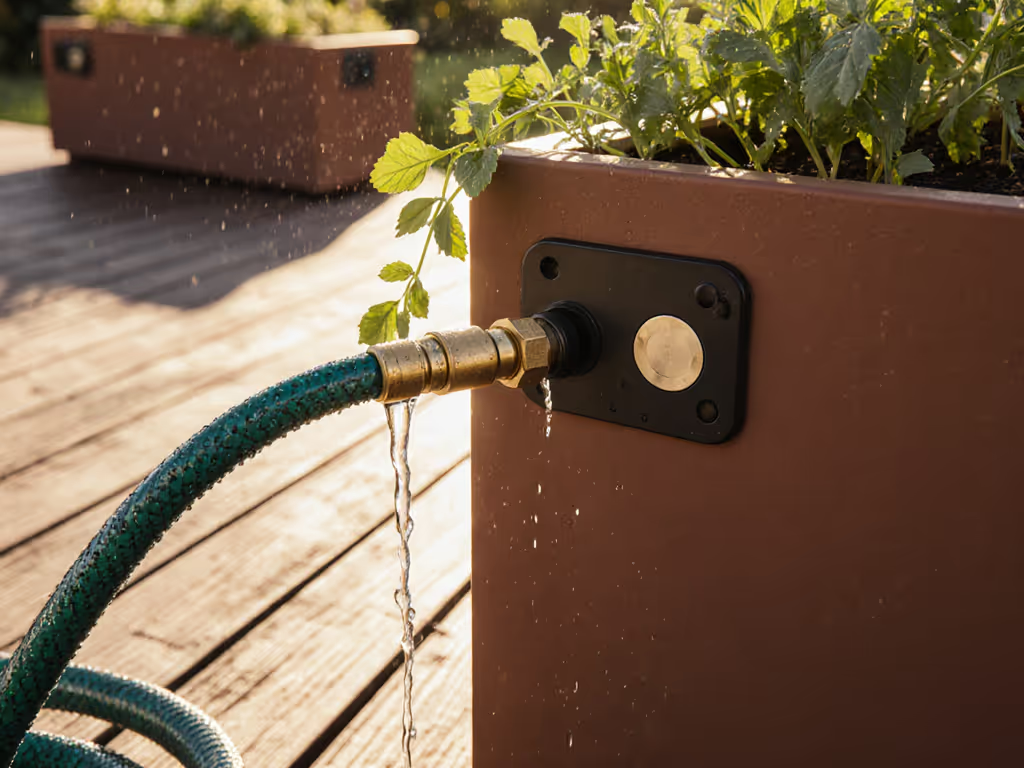
These mount directly through a panel or wall, with rotation happening at the bulkhead itself. Common in RV or boat setups where potable water lines thread through compartments.
Thread Types and Compatibility: The Map You Need
This is where compatibility prevents returns. Before you buy any swivel fitting, you must know what threads live at each end of your connection. Mismatched threads are the #1 reason for leaks, frustration, and returns. For a compatibility deep-dive, see our garden hose thread types guide.
Standard Garden Hose (GHT)
Most residential garden hoses in North America use GHT (Garden Hose Thread), a 3/4" female connection at the spigot. Swivel adapters for GHT are abundant and affordable. Start with the spigot, end with a click-fit finish, and most modern systems feature a simple compression or barbed coupling.
Pipe Thread Standards
If your system includes quick-connects, timers, Y-splitters, or commercial-grade fittings, you'll encounter NPTF (National Pipe Thread Fuel) or NPSM (National Pipe Straight Mechanical) connections.
NPTF is tapered and seals via thread deformation; NPSM is straight and relies on an O-ring or mating surface. These are not interchangeable, and mixing them causes slow leaks that seep past the shutoff for weeks before you notice.
Other standards like BSPP (British Standard Pipe Parallel) and BSPT (British Standard Pipe Tapered) appear in imported equipment and RV systems. Thread pitch differs from their North American cousins; a thread that looks right may not seal or may cross-thread under tightening.
The decision rule: Photograph or write down the thread type (or measure the size and count threads per inch) before adding a swivel adapter. If you can't identify it, ask the reel, timer, or quick-connect manufacturer (or hold it up to a known-good fitting and compare).
Rotating Hose Fitting Benefits: What You Actually Gain
Pressure and Flow Preservation
Kinking and twisting don't just damage rubber; they choke flow. A twisted section acts like a pinch valve, starving your nozzle or sprinkler head. Swivels let pressure travel straight through, delivering full GPM at the far end of your yard. To match flow and pressure to your setup, use our garden hose PSI ratings comparison.
Reduced Fatigue and Back Strain
When a hose fights you (resisting because it's torqued), you grip harder and pull longer. Swivels eliminate that resistance. Your hand, shoulder, and lower back notice immediately, especially if you're managing the hose solo or you're over 60.
Extended Equipment Life
Quick-connects, nozzle shutoffs, and timer seals all suffer from hose twisting. A swivel upstream of these components means they're not being slowly unscrewed or warped by rotational stress. One swivel at the spigot connection often extends the life of three downstream accessories.
Spigot Connection Durability
Your spigot threads take the most abuse because that's where all the twisting energy is concentrated. A spigot connection durability test comparing systems with and without swivel fittings shows lower thread wear and fewer corrosion leaks. If your spigot is old brass (which corrodes) or new plastic (which strips easily), a swivel acts as a shock absorber.
Choosing the Right Swivel for Your Setup
Material Matters
Swivel fittings come in plastic, zinc-plated brass, and stainless steel. For suburban yards and moderate flow (sprinklers, car washing, general irrigation), brass with stainless seals and a sealed bearing is the sweet spot (durable, forgiving, and affordable).
Plastic swivels work for low-pressure tasks (soaker hoses, gentle spray) but degrade faster in UV and freeze-thaw cycles. Stainless is overkill for most home gardens but worth it in salt-air environments (coastal) or where you're building a long-term potable system.
Flow and Pressure Rating
Check the swivel's rated GPM and PSI. Most residential garden swivels handle 40-60 PSI and 10+ GPM, which covers standard spigots, sprinklers, and handheld nozzles. Pressure washers run higher (1500+ PSI); confirm your swivel is pressure-washer rated before connecting one, or the swivel will fail and spray water sideways.
Size and Weight
Cam couplings and swivel assemblies generally have larger bodies than barbed or push-to-connect fittings. If your spigot is crowded (outdoor shower, frost-proof valve, or multiple shutoffs nearby), a bulky swivel may not fit. Measure your available space before ordering.
Common Swivel Scenarios and Quick Fixes
At the spigot: Most critical. A straight swivel here eliminates root-cause twisting for everything downstream.
Before a nozzle or shutoff: Add a small swivel if your nozzle keeps loosening or your shutoff valve seems to spin freely without closing properly.
In a reel connection: If your hose reel binds or the hose wraps unevenly, a swivel between the reel outlet and your first hose segment lets the reel rotate smoothly. For storage picks that pair well with swivels, see our best garden hose reels.
With quick-connects: Some quick-connect couplers include built-in swivels; others don't. Check your coupler spec. If it's a fixed connection, adding a swivel adapter upstream means you get the benefits without buying a new coupler. To round out your setup, browse our garden hose accessories guide.
Related Articles