Professional Garden Hose for Vineyards: Pressure Tested
By Priya Nandakumar • 19th Mar
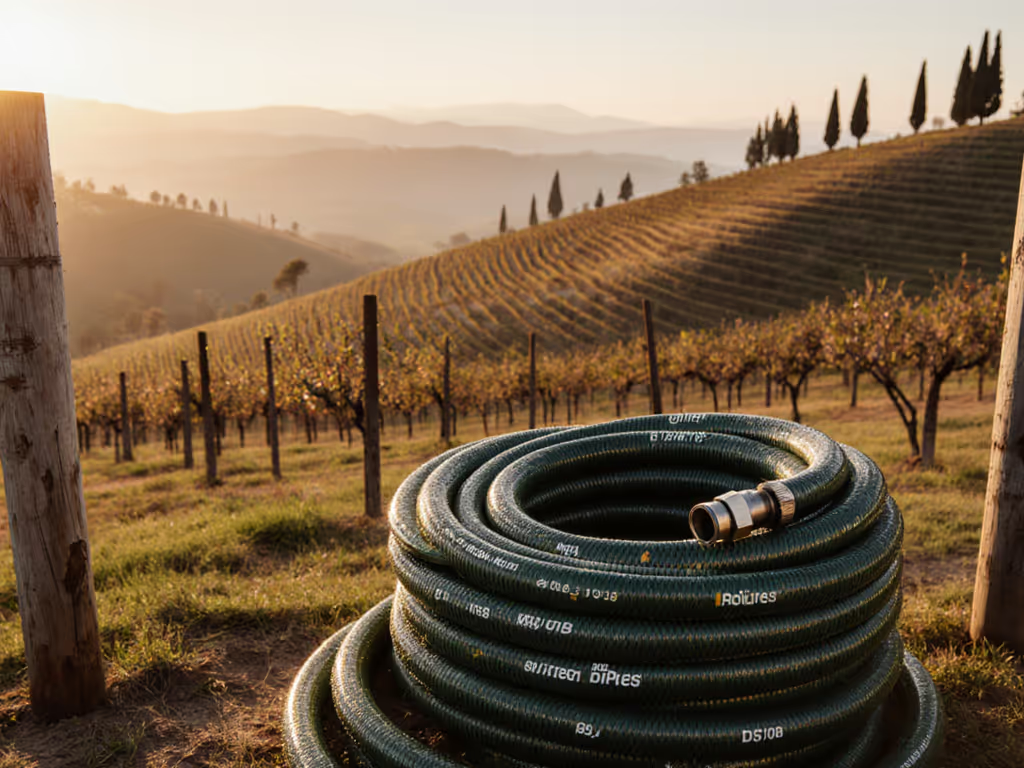
Vineyard irrigation isn't lawn watering scaled up. A professional garden hose for grapes must survive uneven terrain, trellis rigging, and the relentless coupling of pressure spikes from micro-regulations meeting rigid soil. Most off-the-shelf watering hose specs (even premium consumer models) fail under the cumulative load of slope-induced friction loss, repeated coil-memory defeat, and the incompatibility trap where three fittings look identical but don't thread together. For a fast diagnostic and prevention checklist, review our garden hose thread types and compatibility solutions. This guide cuts through vineyard hose mythology with measured thresholds and a systems-first lens.
Why Vineyard Hose Selection Differs from Residential Lawn Use
A backyard garden and a professional vineyard share the same hose coupler standard (GHT), but the operating envelope couldn't be wider. Residential systems tolerate a kink every season; vineyard systems in production cannot. The difference isn't brand loyalty, it's architecture.
A typical suburban yard operates at 40-60 PSI from the spigot, with 25-50 feet of run to an end load (sprinkler, nozzle). A grape cultivation watering system on rolling terrain often runs 100-300 feet of hose, with multiple taps along trellis system irrigation lines, elevation changes that add 0.43 PSI per vertical foot, and pressure regulators that demand stable inlet flow to hold their setpoint.
The weak link principle matters here: if a splitter, fitting, or hose segment throttles flow, every regulated zone downstream starves. Measure flow at the spigot; design back from the task. That isn't theory, it's the outcome of tracing a 12 PSI drop on a client's patio soaker line to a single kinked hose trapped under a pot. Replacing it with a full-bore 5/8-inch rubber hose and re-threading all connections through a full-flow Y-splitter fixed midnight leaks that had plagued the system for two seasons.
FAQ: Hose Diameter for Wine Grape Irrigation Efficiency
Q: Should I use 5/8-inch or 3/4-inch diameter hose in my vineyard?
A: The answer is task-dependent and measurable. Friction loss is non-linear with diameter:
- 5/8-inch hose: At 10 GPM flow over 100 feet, friction loss is roughly 7-9 PSI (depending on hose type and roughness). Lighter, easier to coil and drag through rows.
- 3/4-inch hose: Same 10 GPM over 100 feet yields 2-3 PSI loss. Heavier, but for long vineyard runs with multiple taps, the pressure recovery justifies the weight penalty.
For wine grape irrigation efficiency, run 3/4-inch from the main supply to primary distribution points, then 5/8-inch to individual trellis system irrigation zones. For data-backed selection across 1/2, 5/8, and 3/4 inch options, see our garden hose diameter guide with flow calculations. This compatibility matrix (matching diameter to flow demand and run length) is where most DIY systems hemorrhage pressure without anyone knowing why.
Industry testing confirms that hoses rated for high flow (over 500 GPM at full bore for a 5/8-inch) perform better under surge loads. The Stanley Fatmax model, for instance, achieved 587.3 GPM under lab conditions, a benchmark worth checking against other "professional" claims that lack third-party test data.
FAQ: Material Selection - Rubber vs. Vinyl Hybrid for Durability
Q: What material stands up to vineyard sun, thorns, and gear rolling over it?
A: Full rubber dominates vineyard duty:
- 100% rubber: Resists UV, abrasion, and pinch damage. Cost is 40-60% higher than vinyl. Kink-resistant when properly coiled, though coil memory varies by manufacturer.
- Vinyl or vinyl-rubber hybrid: Cheaper, lighter, but degrades in direct sun in 2-3 seasons on exposed trellises. Thorn penetration is higher.
- Reinforced or spiral-wrap varieties: Add burst-pressure rating (often 300+ PSI rated), which is unnecessary for drip/micro-irrigation zones (which run 25-40 PSI regulated) but valuable as a safety margin in main supply lines subject to water hammer when solenoid valves close abruptly.
A critical detail: hose "burst PSI" in marketing often assumes a single-spike test. Real-world fatigue (pressure cycling thousands of times per season) fails hoses at 60-70% of rated burst. Build in margin: size main supply for 150+ PSI rated hose even if nominal pressure is 60 PSI.
FAQ: Kink Resistance and Coil Memory on Sloped Terrain
Q: I've bought "kink-free" hoses that still kink. What's the actual threshold?
A: "Kink-free" is marketing theater unless paired with diameter and material. Here's the reality:
When coiled tightly for storage, all hoses develop memory. A 5/8-inch rubber hose uncoils flat within 30 seconds in warm sun; the same hose in 40°F morning air takes 10+ minutes and may retain loops. Vinyl and lightweight synthetics hold coils much longer or permanently. For vineyard use, where you're pulling sections from a reel daily across slopes and through brush:
- Coil loosely in storage (1-meter loops, not a figure-eight).
- Lay hose in sun for 5-10 minutes before pulling taut through the vineyard.
- Route runs in straight lines; every 90-degree turn under pressure is a kink risk.
Eley and Dramm hoses, tested by independent labs, snapped out of kinks faster than budget alternatives when intentionally bent, a proxy for real-world flex. Dramm's hexagonal shape (not round) reduces coil memory by up to 30%, worth the extra $15-20 per 100 feet for long runs.
FAQ: Coupling Standards and the Compatibility Matrix
Q: Why do some of my quick-connects leak immediately, and others hold for years?
A: Hose couplings are stamped with a thread size (typically ⅜ or ½ inch NPT/NPTF) but tolerance stacks quickly:
- Brass couplings: Denser, tighter tolerances, less prone to cross-threading. Cost is 3-5x plastic, but plastic couplings can strip after 20-30 connections.
- Washers and O-rings: A 5-cent rubber washer is the #1 point of failure in vineyard systems. Hard water minerals (calcium, magnesium) accumulate around washers and create micro-gaps. Replace washers and inspect O-rings every season. Keep a small stock of metric O-rings (10 mm, 13 mm, 16 mm) and nitrile washers on hand.
- Thread tape (PTFE): Two wraps max on female threads; over-wrapping causes binding and reduces effective seal depth.
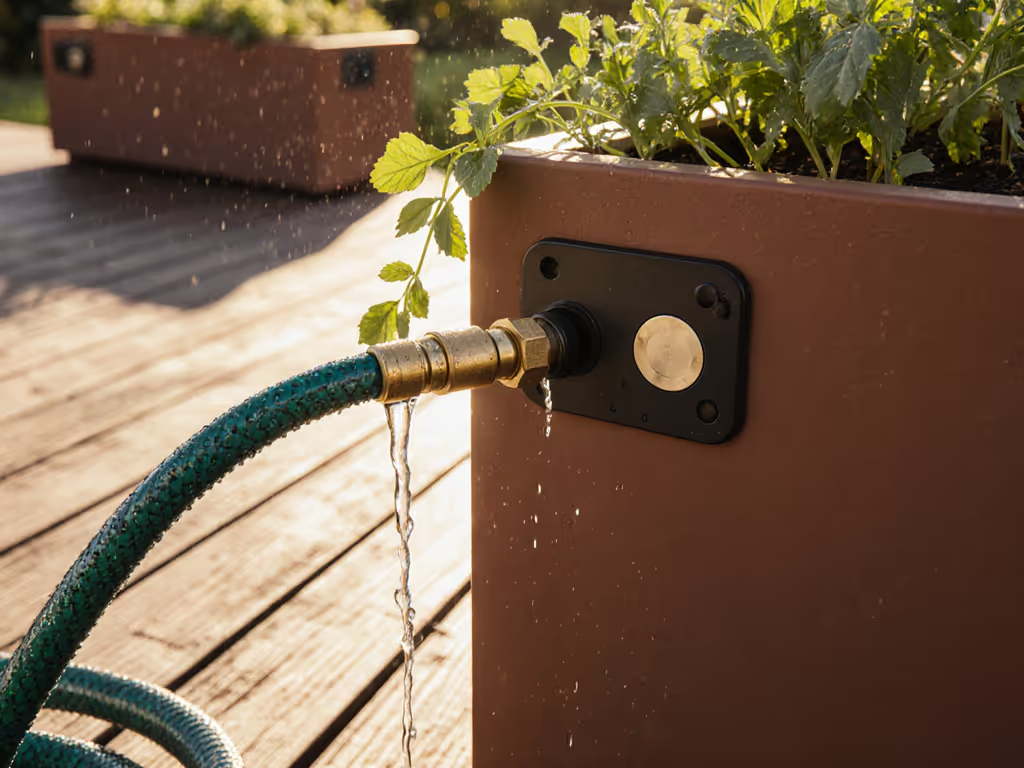
Before connecting any hose section to a reel, timer, splitter, or regulator, verify thread size on both ends. Mismatched couplings (a ½-inch male fitting forced onto a ⅜-inch female) will leak at 30+ PSI under load. A compatibility matrix for your vineyard should list every fitting in the system by type, size, and material. No guesswork.
FAQ: Pressure Regulation and Flow Consistency Across Zones
Q: How do I ensure even water delivery to rows at different elevations?
A: Elevation and hose length conspire to unload pressure as you ascend or extend distance. A 100-foot, 5/8-inch run at 15 GPM loses ~10 PSI to friction; add 30 feet of elevation gain (+13 PSI static pressure requirement) and a zone fed from the end of the line receives 23 PSI less than the main supply. Micro-drip zones that are pressure-regulated typically require 20-30 PSI inlet to hold a 12-15 PSI setpoint; if inlet drops below 25 PSI, regulation fails and the zone floods or starves.
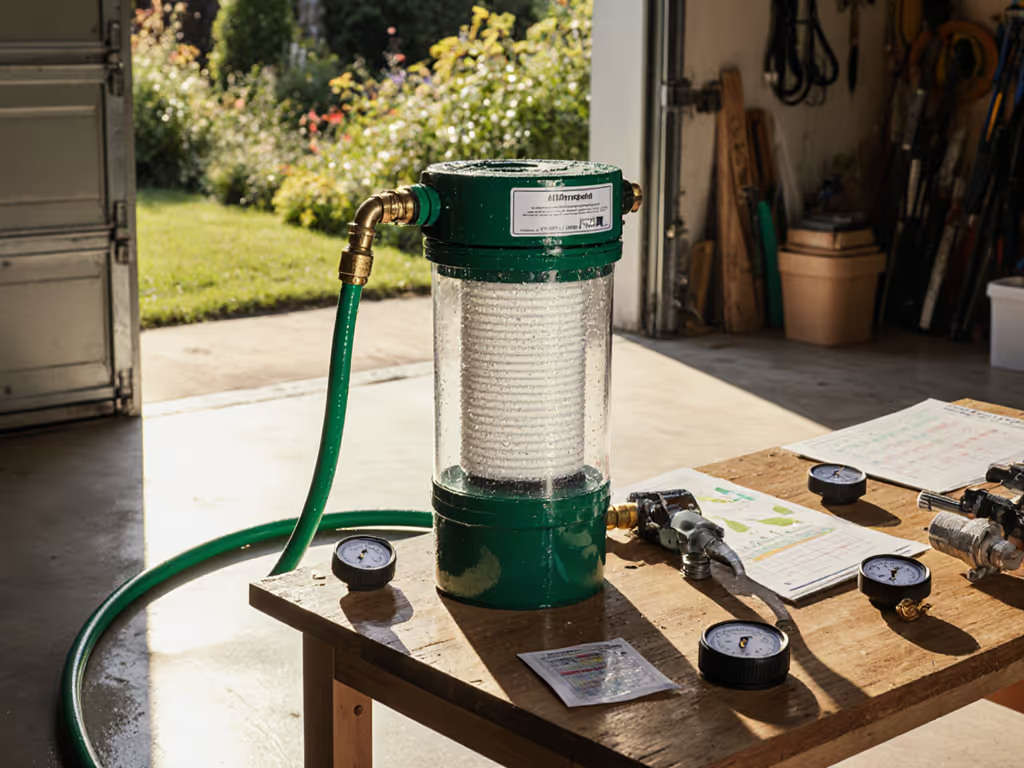
Solution: Install a secondary pressure regulator at the top of each elevation band. We benchmarked top units in our pressure regulator tests to help you choose consistent-flow models. Run manifolds (brass Y-splitters with full ports) rather than threaded inline tees, which choke flow by 20-40% compared to Y-geometry. Build pressure data into your design: test flow at the spigot under zero load (maximum), then at full load (all zones on), and log the difference. That delta is your system loss; if it exceeds 15 PSI, upsize hose diameter or subdivide the system.
FAQ: Winterization and Freeze Damage Prevention
Q: How do I protect a professional hose system through freeze-thaw cycles?
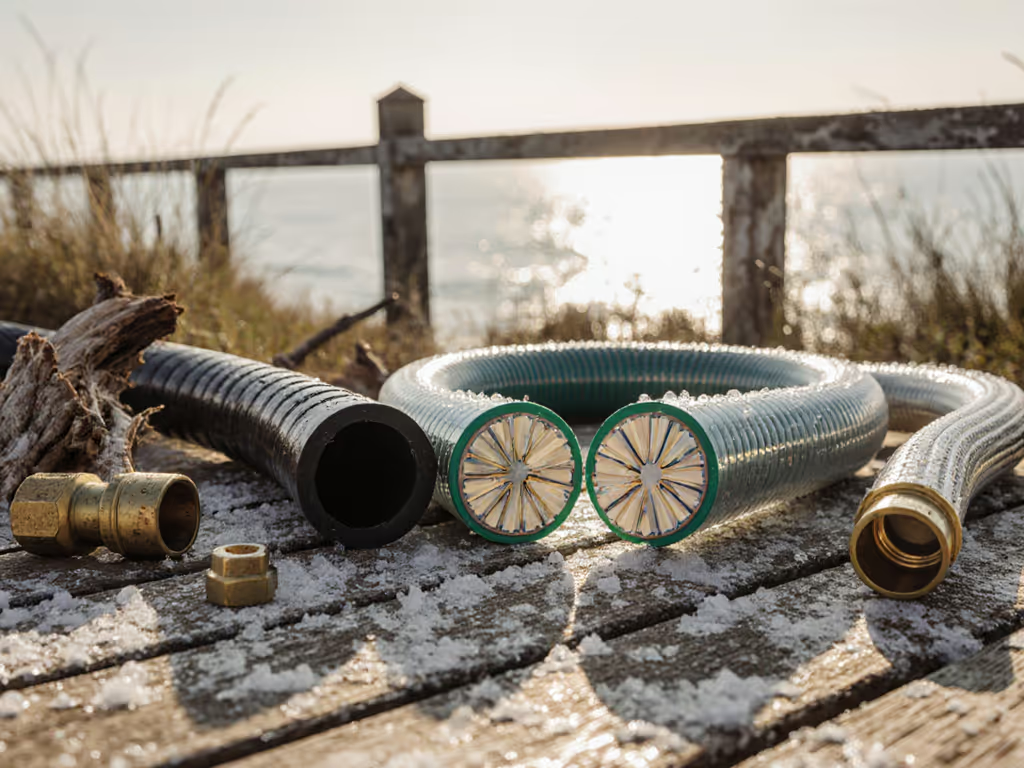
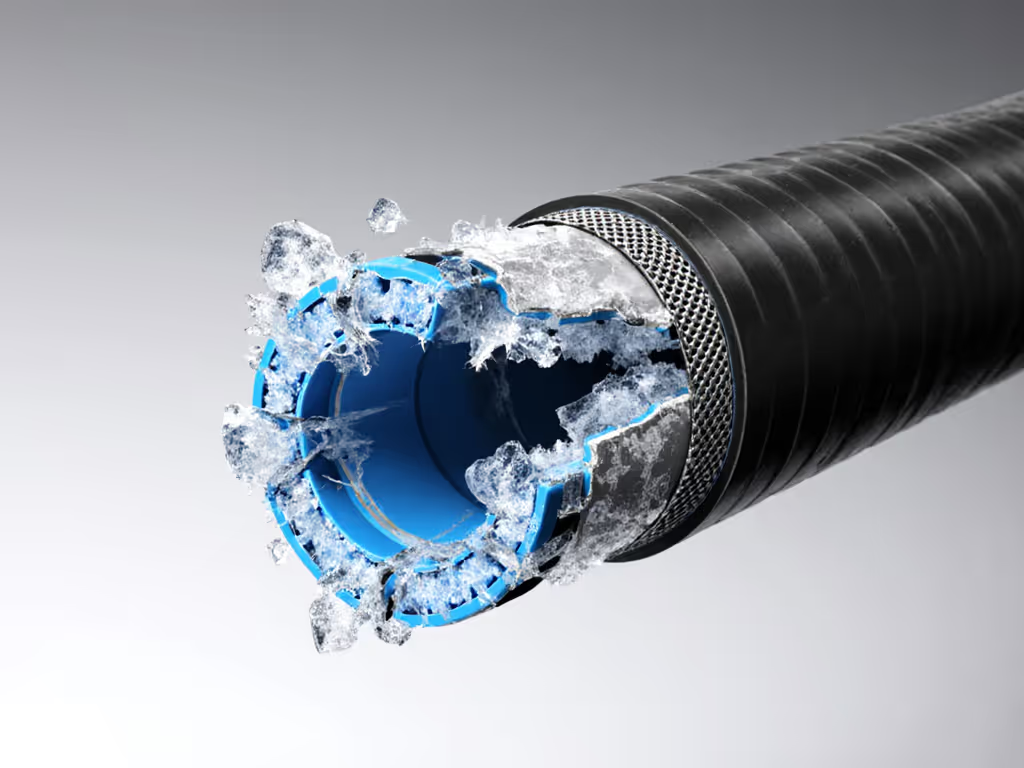
A: Water trapped inside hose or fittings expands ~9% as it freezes, splitting rubber and cracking brass:
- Drain completely at first frost. Open all end caps and bleed air from the highest points of your layout.
- Coil for storage in a garage, shed, or covered reel; never leave hose under tension in winter (coil memory locks in kinks that invite water pockets).
- Y-splitters and timers: Remove and store indoors. Even "freeze-proof" valves will trap water in the housing if the spigot-side shutoff isn't cracked open.
- Quick-disconnects: Take apart, drain both halves, and wipe O-rings dry. If you skip this, ice crystals form on the seals and they'll leak come spring.
A single forgotten 100-foot section of hose left connected to a spigot in a freeze-thaw region can develop 3-5 micro-cracks by March, each a point of weeping loss and pressure drop during the growing season. In sub-zero regions, follow our advanced hose winterizing guide for vacuum storage and heated options.
FAQ: Matching Hose Specs to Vineyard Tasks
Q: How do I choose between a heavy-duty rubber hose and a lighter hybrid for day-to-day use?
A: It depends on the role in your system:
Main supply line (spigot to primary manifold): 3/4-inch, 150+ PSI rated rubber. This line carries full spigot pressure and sees the most wear. Budget $1.50-$2.50 per foot.
Secondary distribution (manifold to field reels or rows): 5/8-inch rubber or rubber-vinyl blend. Lower pressure (post-regulator, typically 40-60 PSI), and you can tolerate slight kinking if sections are swapped seasonally. Budget $0.80-$1.50 per foot.
Temporary or seasonal zones (micro-drip, soaker layouts): 1/2-inch vinyl or lightweight polyurethane if potability isn't a concern; 1/2-inch NSF-rated polyurethane if watering edibles. These are pressure-regulated (20-30 PSI) and less prone to burst. Budget $0.50-$1.00 per foot.
Brand comparisons from lab testing confirm that Dramm ColorStorm and Eley rubber hoses rank highest for vineyard terrain hose durability in outdoor exposure trials, with Flexzilla favored for lightweight, long-distance runs where worker fatigue is the limiting factor.
FAQ: Calculating Hose Length and Friction Loss
Q: My vineyard is 200 feet long with rows on a slope. What hose length do I need, and will I have enough pressure?
A: Measure the actual path your hose will take, not the crow-flies distance, accounting for turns, obstacles, and vertical rise. Then model friction loss:
Friction loss formula (rough): PSI loss ≈ (0.08 × GPM²) ÷ (diameter in inches)⁴ × (length in hundreds of feet).
For a 200-foot 5/8-inch hose at 12 GPM: PSI loss ≈ (0.08 × 144) ÷ (0.16) × 2 ≈ 14 PSI.
Add elevation: 30 feet uphill = +13 PSI static pressure demand.
Total pressure drop = 14 + 13 = 27 PSI. If your spigot delivers 60 PSI, your far end receives ~33 PSI, adequate for a regulated drip system (which targets 20-25 PSI inlet), but tight if a pressure washer or high-flow sprinkler is on that line.
Action: Use 3/4-inch hose for the main run, then drop to 5/8-inch at secondary zones. This cuts friction loss on the main by ~70%, delivering ~48 PSI to the regulator inlet, plenty of headroom. For layout planning and pressure-loss math, use our hose length calculator guide.
Putting It Together: A Vineyard Hose System Checklist
- Spigot audit: Test flow and pressure at the source under full load. Set a baseline.
- Route mapping: Measure actual hose path (including slope and turns) and model friction loss for your planned diameter and GPM.
- Coupling inventory: List every fitting, thread size, and material. Test connections for leaks at operating pressure before planting season.
- Material selection: 3/4-inch rubber main supply, 5/8-inch or smaller for regulated zones.
- Regulator placement: Install secondary regulators at elevation breaks to maintain consistent inlet pressure to each zone.
- Storage protocol: Coil loosely after each use; drain completely before winter.
- Maintenance log: Replace washers and O-rings annually; inspect hose for cracks or UV damage in spring.
The vineyard hose system that runs for five seasons without a midseason replace-and-repair cycle is not an accident, it is engineered backward from the flow requirement, through a tested compatibility matrix, and built with brass and rubber that tolerate real-world pressures and abuse.
Next Steps: Systems Validation and Pressure Testing
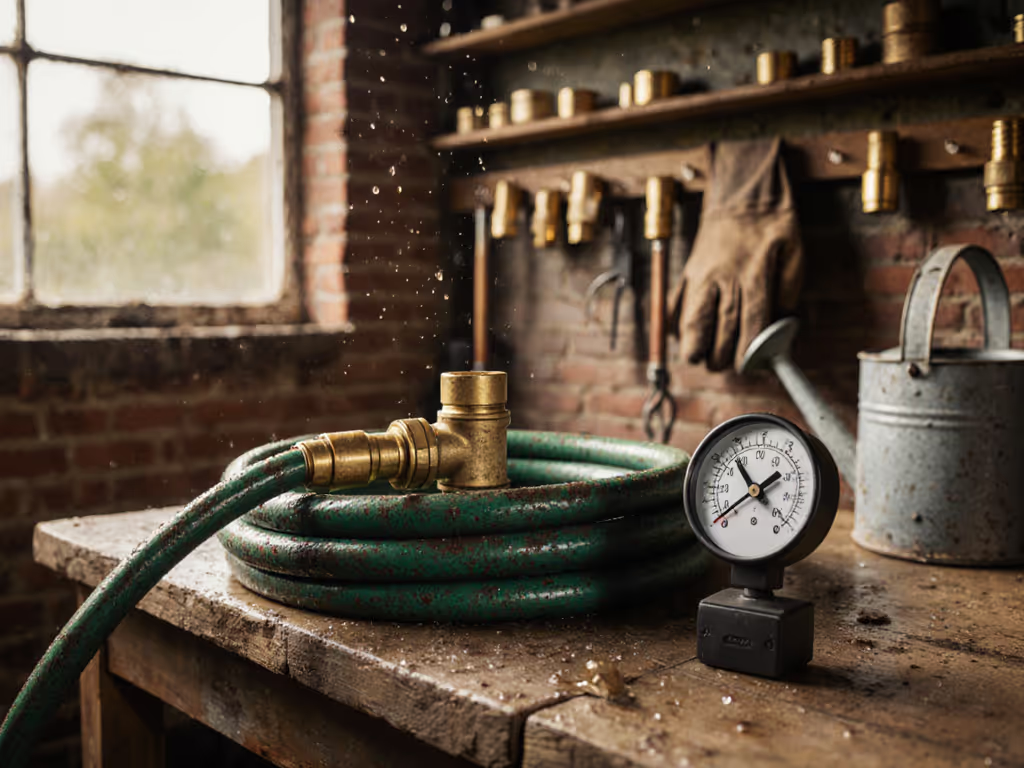
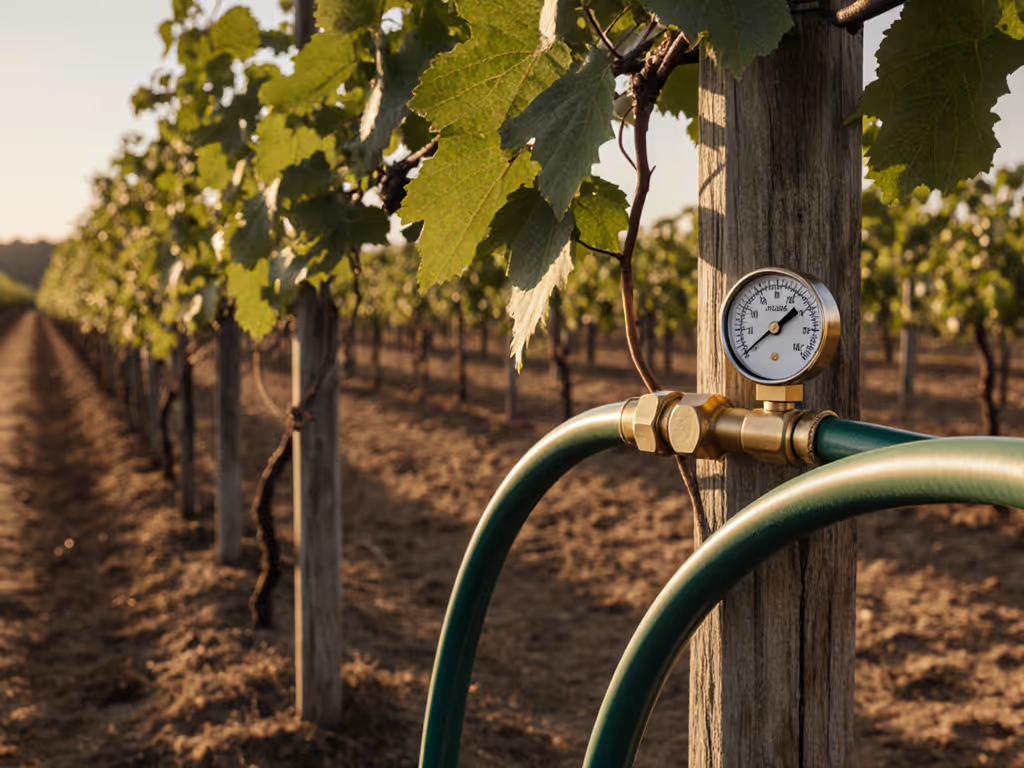
Before committing to a large hose layout, run a pilot test on one section of your vineyard. Connect your chosen hose diameter and coupler type to your spigot, attach a pressure gauge at the end, and record flow under load at 25 feet, 50 feet, 100 feet, and the full planned distance. Compare measured pressure drop to your model. Any variance signals a coupling leak, kink memory, or undersized component that will throttle the entire system.
Then test your proposed regulators, splitters, and nozzles in that pilot run. If flow or pressure is inconsistent, troubleshoot the compatibility matrix before scaling the design to all rows. One spring of careful validation saves three seasons of night-time soaker leaks and mid-summer system failures.
Related Articles