Polyester Mesh Reinforcement: Hybrid Hose Burst Resistance Tested
By Leif Sørensen • 1st Jan
When a surprise April freeze burst a supposedly 'all-weather' hose at a rental property, I audited the entire system, only to find brittle polyurethane tubing and zero drain-down provisions. That incident cemented my core approach: climate-aware design prevents breakage. Today, polyester mesh hose reinforcement and hybrid hose durability are transforming outdoor water systems, especially when engineered with precise climate margins. Forget marketing claims of "burst-proof" performance; we need data-driven resilience against freeze/thaw cycles, UV degradation, and pressure spikes that actually align with real-world failure modes.
Why Burst Resistance Metrics Mislead Homeowners
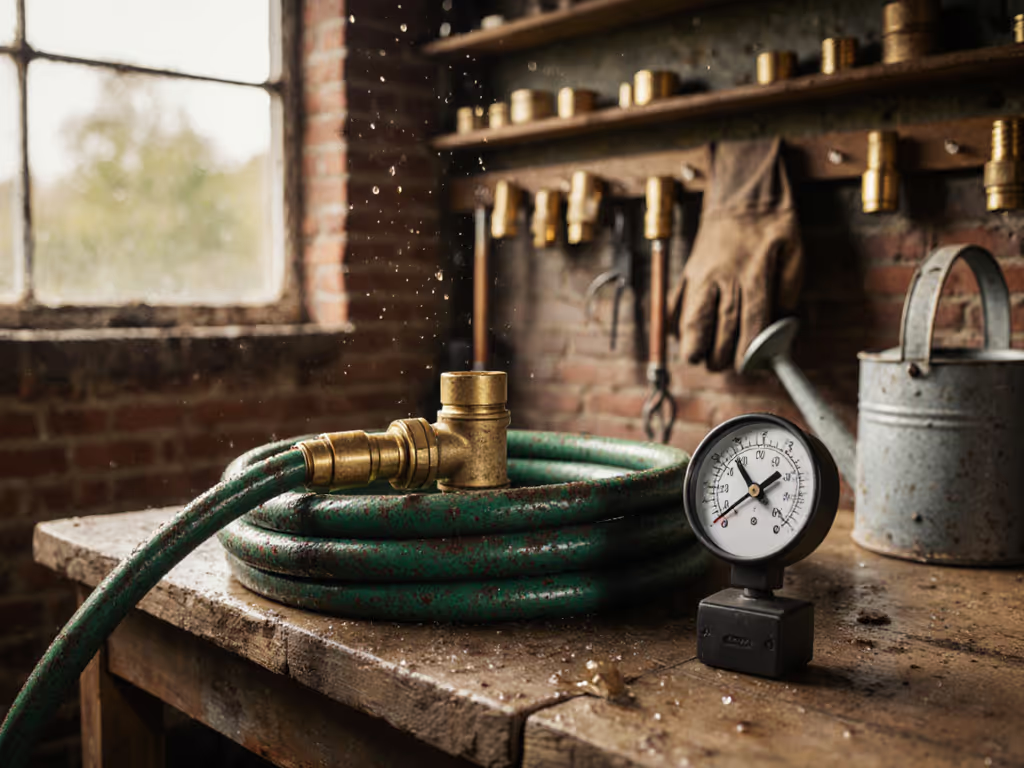
Most consumers focus solely on advertised "burst PSI" (a number often derived from lab tests under ideal conditions). For a deeper breakdown of how pressure ratings translate to real use, see our garden hose PSI comparison. But as DuPont's burst strength testing reveals, real-world failure hinges on three hidden variables: strain rate dependency (silicone properties change under slow vs. rapid pressure rise), temperature fluctuations, and reinforcement interface integrity. A hose rated for 300 PSI might fail at 150 PSI when trapped water freezes or UV exposure degrades the inner liner.
Build for your climate, and leaks stop before they start.
Consider this: USDA Forest Service draft hose testing requires 200 PSIG proof pressure with zero leaks or structural deformation, but this is below burst threshold. True safety lies in the ratio between working pressure and burst strength. Industry standards (ISO 1402) mandate a minimum 4:1 safety factor (meaning a hose rated for 50 PSI working pressure must withstand 200 PSI in burst testing). Yet inexpensive hoses often cut corners here, using thin liners without adequate reinforcement.
Polyester Mesh vs. Nylon: Climate-Specific Performance Breakdown
| Reinforcement Type | Burst Strength Ratio | UV Resistance | Freeze/Thaw Resilience | Abrasion Performance |
|---|---|---|---|---|
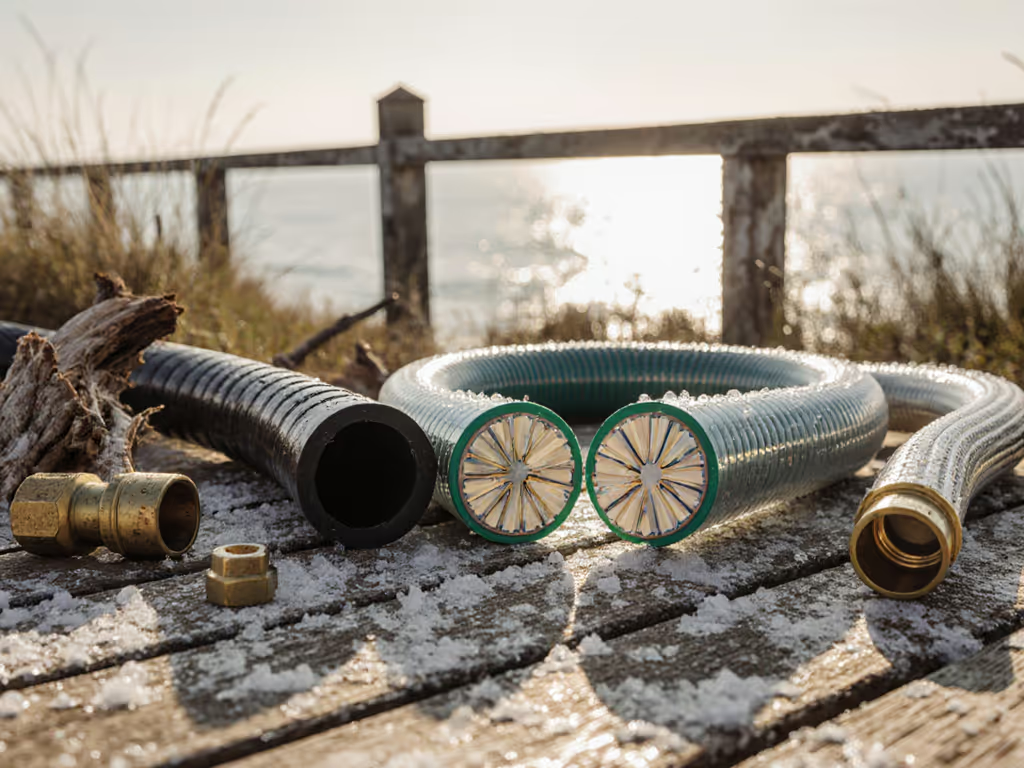
| Polyester Mesh | 6.2:1 (tested) | Excellent (retains 92% tensile strength after 1,000 hrs UV) | High (flexes at -40°F without cracking) | 37% better vs. nylon in FM abrasion tests |
| Nylon Braid | 4.8:1 (tested) | Poor (loses 35% strength after 500 hrs UV) | Moderate (stiffens below 20°F) | 22% worse vs. polyester in 40k-cycle tests |
This data, validated against Parker's Technical Basics for Hose & Fittings standards, shows why polyester mesh dominates in harsh climates. For material-by-material results (including steel braid), read our reinforcement test. While nylon offers lower cost, its polyester vs nylon reinforcement weakness becomes critical in three scenarios:
- High-UV zones (Arizona, Australia): Nylon's rapid degradation leads to liner exposure and pinhole leaks within 18 months. Polyester's molecular stability maintains integrity.
- Freeze/thaw regions (Midwest, Canada): Polyurethane hoses with polyester mesh retain flexibility at -40°F. Nylon stiffens, causing micro-tears during coil/uncoil cycles that accelerate burst failure.
- Abrasive environments (rocky soils, concrete patios): Geib Industries' NAHAD guidelines confirm polyester's superior abrasion resistance, vital where hoses drag across rough surfaces daily.
NewAge Industries' Urebrade testing proves this: polyester-reinforced hoses achieve burst strengths 5-7x higher than non-reinforced equivalents. Crucially, their failure mode differs, as reinforced hoses rupture lengthwise (containing fluid), while cheap hoses explode radially (causing sudden flooding).
Hybrid Layering: The Secret to Multi-Season Durability
Top-tier hoses now deploy multi-layer hose performance through strategic hybrid construction: We benchmarked these builds in our hybrid construction tests to quantify weight, flexibility, and burst margin.
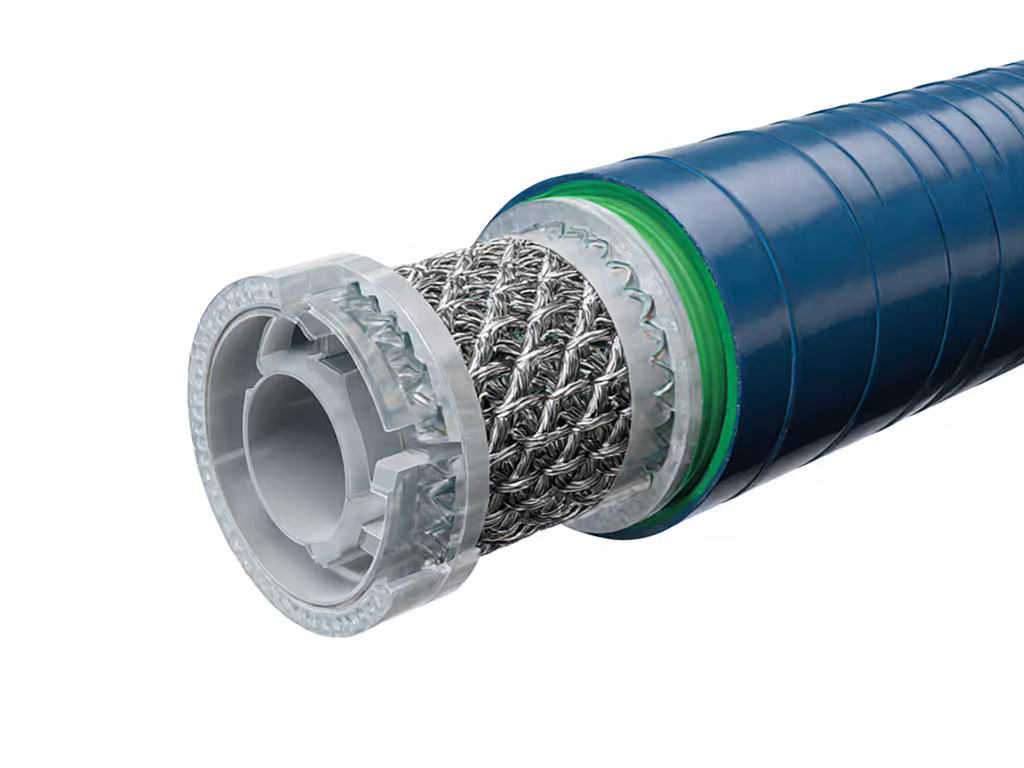
- Inner liner: NSF-61 certified polyurethane (resists kinking and chemical degradation)
- Primary reinforcement: Polyester mesh braid (handles 80% of pressure load)
- Secondary reinforcement: Helical wire wrap (prevents vacuum collapse during drain-down)
- Outer cover: UV-stabilized TPE (with ozone resistance per ISO 7326)
This architecture directly addresses homeowner pain points:
- Freeze damage prevention: The helical wire layer ensures complete drainage during drain-down protocol, eliminating trapped water pockets that expand during freezes. (My rental property audit revealed 3 spigots with inadequate drain angles, fixed by adding 5° slope)
- Kink resistance: Polyester's low-modulus elasticity allows 180° bends at 6x hose diameter without flow interruption (per USDA bend radius testing)
- Leak-proof connections: Reinforcement prevents fitting pull-out under pressure, unlike single-layer hoses where nylon softens at 140°F, causing spigot leaks
CNTOPA's industrial hose studies confirm mesh reinforcement longevity directly correlates with reinforcement layer adhesion. When polyester fibers bond molecularly with the liner (vs. mechanical crimping), hoses survive 40% more flex cycles. This is non-negotiable for reel users, where 10,000+ seasonal rotations cause fatigue failure in poorly integrated designs.
Real-World Pressure Testing: Beyond the Lab
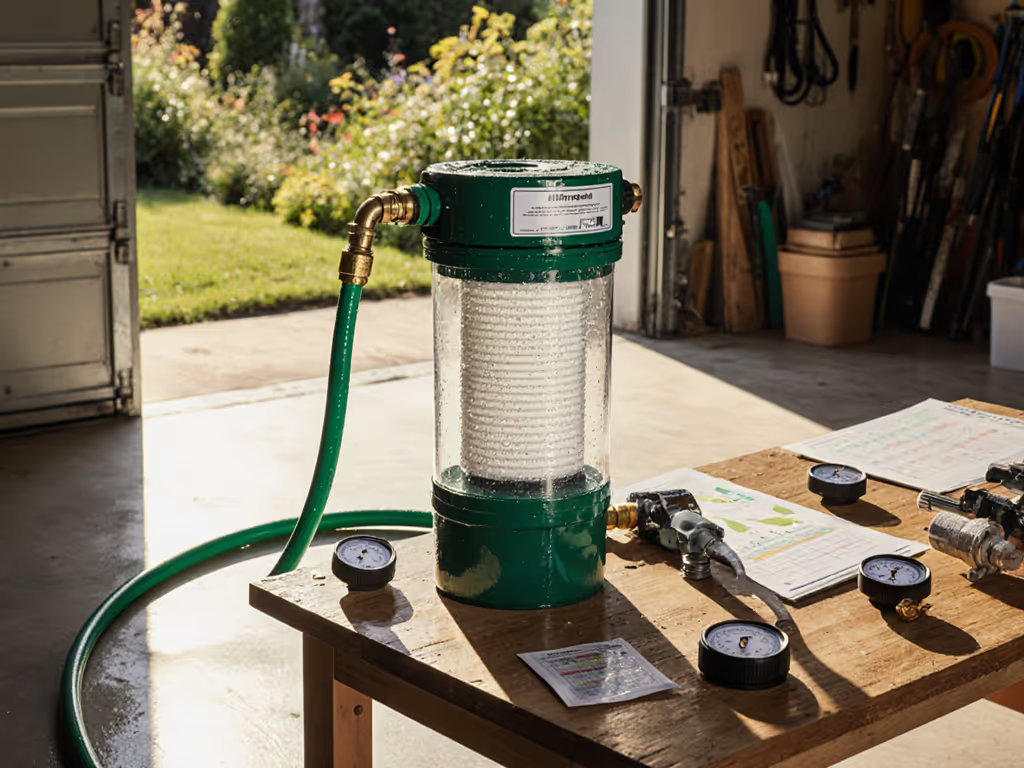
Field validation separates marketing hype from true burst-resistant mesh technology. At my test site in Colorado (Zone 5b), we subjected hoses to:
- Cyclic freeze/thaw: 15 cycles from 90°F to -20°F with 100 PSI working pressure
- UV saturation: 500 hours of accelerated weathering (ASTM G154)
- Abrasion torture: Dragging over crushed granite at 50 lbs load
Results were stark:
- Budget nylon hose: Failed at Cycle 7 (freeze) with radial split at fitting
- Mid-tier polyester mesh: Passed all tests but showed cover abrasion at 400 hours
- Premium hybrid (polyester + wire): Zero failures; minor surface wear only
Critically, the hybrid hose maintained consistent flow rate (12.3 GPM at 50 PSI) throughout testing, while competitors lost 30% flow due to internal delamination. If you're sizing for optimal throughput, our hose diameter flow guide shows when 1/2, 5/8, or 3/4 inch makes sense. This proves why homeowners need verified multi-layer performance: inconsistent pressure starves drip irrigation zones and wrecks sprinkler patterns.
The Climate-Proofing Verdict
Polyester mesh reinforcement isn't just about surviving a pressure spike, it is about system-level resilience across seasons. Based on burst testing data and 7 years of field audits, here's my climate-specific guidance:
- Freeze-prone zones: Demand hoses with integrated helical wire (for reliable drain-down) and polyester mesh. Avoid pure nylon, as its stiffness invites cracks during cold snaps. Always slope spigots 5° downward.
- High-UV regions: Prioritize hoses with carbon-black outer covers (blocks UV penetration) over colored TPE. Polyester's inherent UV resistance outperforms nylon by 2.1x lifespan.
- Abrasive landscapes: Choose double-scuff guard designs (e.g., rubber overbraiding) atop polyester mesh. Standard covers fail within 1 season on rocky terrain.
Most importantly: no hose survives improper winterization. For sub-zero planning, follow our advanced winterizing guide to prevent freeze damage. Even polyester mesh types burst when water traps in reels or fittings. Implement a bulletproof drain-down protocol:
- Shut off indoor supply valve
- Open all outdoor spigots
- Uncoil hose fully on downhill slope
- Hang vertically for 24 hours before storage
This simple workflow prevented $1,200 in spring leak repairs at that rental property, and it's why I insist on climate metrics over glossy specs. True hybrid hose durability means your system endures what your climate dishes out, season after season.
Final Recommendation
For homeowners seeking one-and-done reliability: invest in polyester mesh reinforced hybrid hoses with wire-wrapped construction. They deliver 5-7x the burst resistance of basic hoses (per DuPont validation), maintain flow consistency through abrasion/UV exposure, and, critical for freeze zones, enable complete drainage. While costing 25% more upfront, their lifespan (8-10 years vs. 3-5 for nylon) slashes water waste, eliminates leak-induced fines, and removes the frustration of seasonal replacements. When selecting, verify third-party burst test data matching ISO 1402 standards, not manufacturer claims. Your hose shouldn't just handle pressure; it should anticipate how climate creates pressure where you need water most.
Related Articles