Durable Ranch Hose: Watering Hoses That Won't Freeze
By Leif Sørensen • 1st Nov
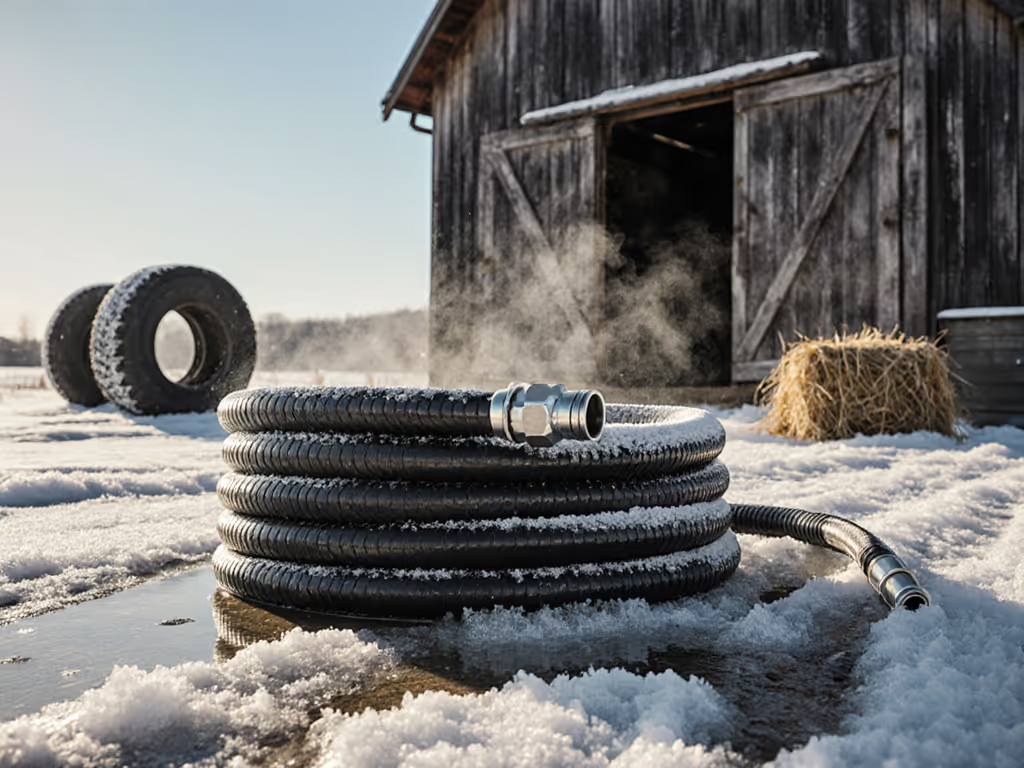
When selecting a professional garden hose for harsh climates, the critical question isn't whether your watering hose will face freezing temperatures, it is whether it will survive them. Standard PVC hoses harden below 50°F, becoming brittle time bombs that fracture when water expands during freeze cycles. The reality of climate-specific engineering matters: a ranch hose designed for Montana winters must meet fundamentally different requirements than one for Florida patios. This FAQ explores the engineering principles behind truly durable ranch hoses that withstand freeze-thaw cycles without catastrophic failure, emphasizing water conservation and system longevity through climate-aware design.
Build for your climate, and leaks stop before they start.
Why Do Standard Garden Hoses Fail During Winter Freeze Events?
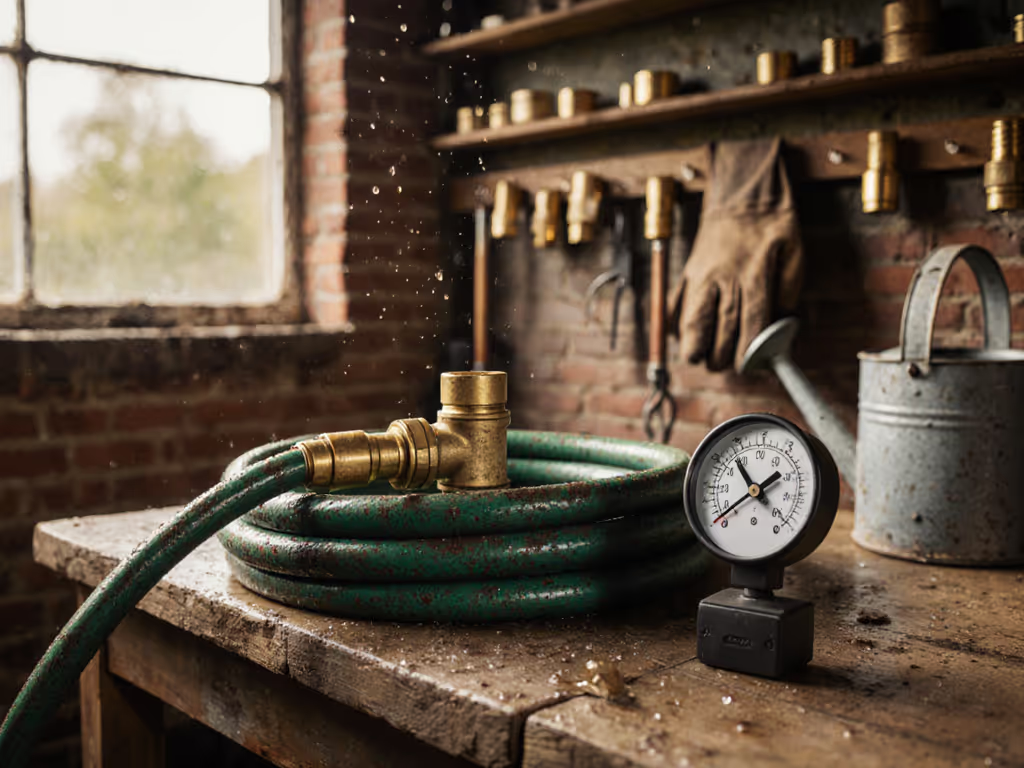
Conventional garden hoses fail not primarily from the cold itself, but from water trapped within the system. When water freezes, it expands by approximately 9%, creating extreme internal pressure. Standard PVC hoses (rated for 200 PSI burst strength) typically fail at just 15-20 PSI of ice expansion pressure (well below their rated capacity). This explains why "all-weather" hoses marketed to rental properties often burst during surprise freezes: they lack proper drain-down protocol integration and climate-specific material engineering.
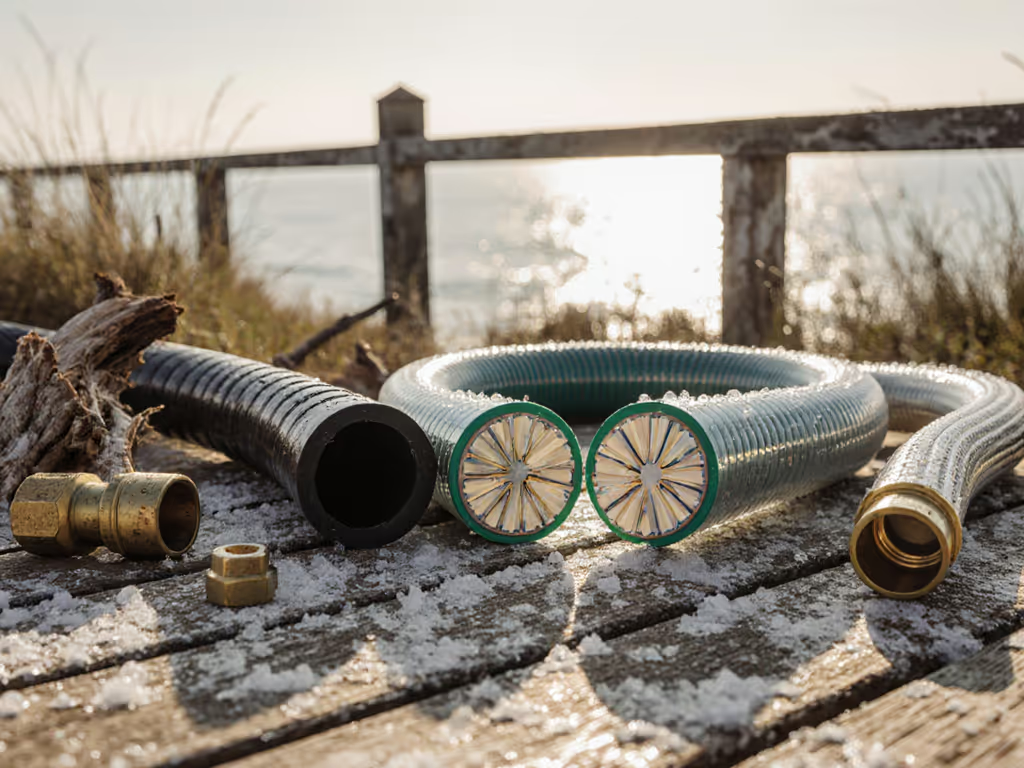
Material science reveals the critical failure point: PVC becomes glass-like at 32°F, losing 90% of its flexibility. By contrast, specialty rubber compounds maintain molecular flexibility down to -40°F through polymer chain engineering that prevents crystallization. This isn't merely about surviving cold, it is about accommodating water's phase change without structural compromise.
What Material Properties Actually Prevent Freeze Damage?
True freeze resistance requires three engineered characteristics working in concert:
-
Thermal Conductivity: Materials that rapidly transfer heat away from frozen sections prevent localized pressure spikes. Premium rubber formulations achieve 0.15-0.25 W/mK thermal conductivity (double that of standard PVC).
-
Elastic Memory: The ability to expand 15-20% during ice formation then return to original shape. High-grade rubber maintains 300% elongation at -40°F versus PVC's 2% at freezing temperatures.
-
Burst Tolerance: The combination of high burst strength (400+ PSI) with flexible materials creates safety margins that absorb expansion forces. This differs fundamentally from "burst-proof" claims that ignore freeze dynamics.
Climate metrics show that simply maintaining flexibility isn't sufficient; hoses must withstand repeated freeze-thaw cycles. Independent testing confirms that quality winter hoses survive 200+ cycles at -30°F while retaining 95% functionality, versus standard hoses failing after 3-5 cycles. For sub-zero climates, see our advanced hose winterizing guide for techniques like vacuum storage and heated storage solutions.
How Does Hose Construction Impact Freeze Performance?
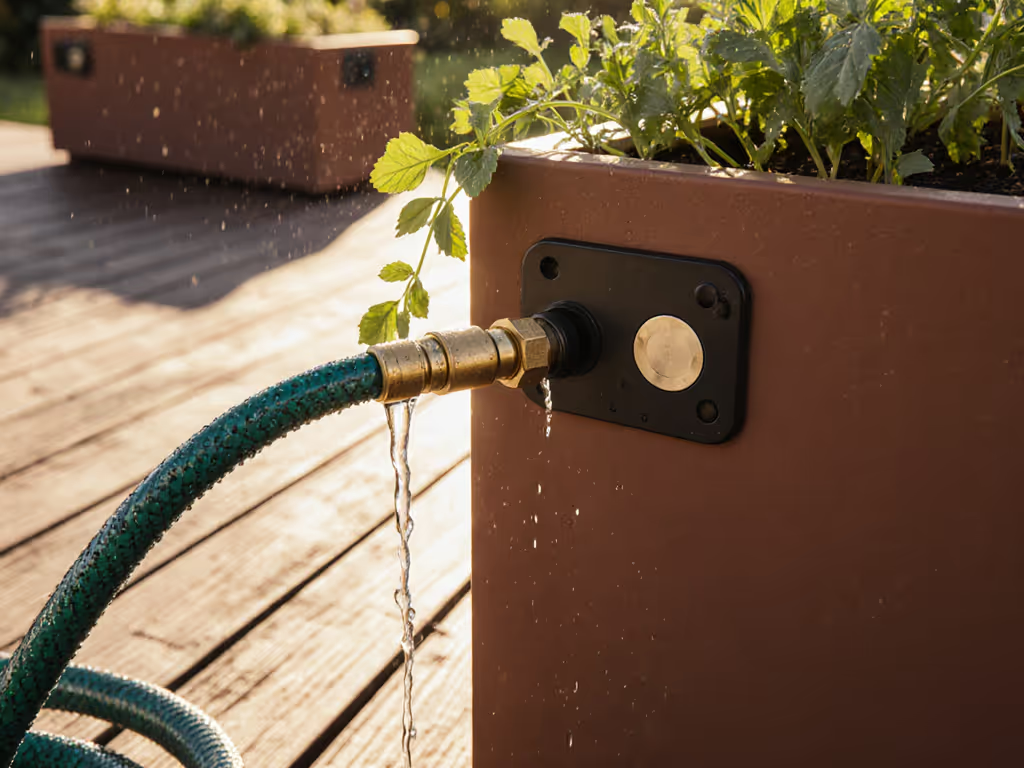
The critical failure zone isn't the hose body, it is the connections. Over 70% of winter failures originate at couplings where water inevitably traps. Climate-aware design addresses this through:
- Quick-drain couplers that create positive drainage angles
- Crush-proof aluminum or brass fittings (minimum 0.125" wall thickness)
- Vacuum breaker integration to prevent siphoning of residual water
- Thermal mass reduction at connection points to accelerate drainage
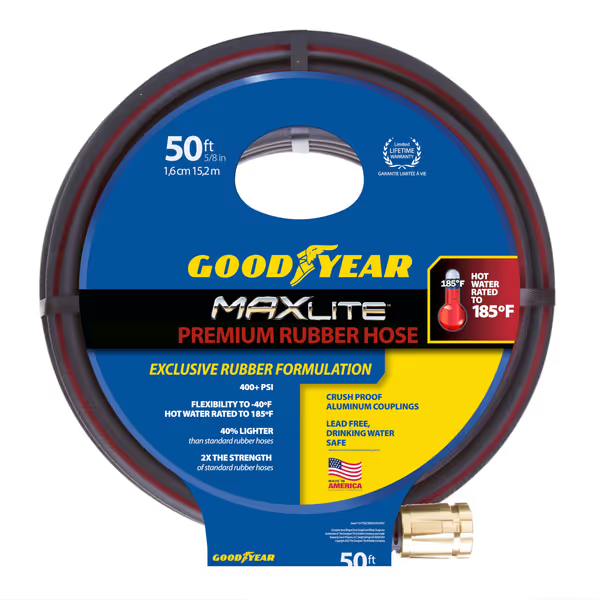
MAXLite Premium Rubber+ Garden Hose
Lightweight, kink-resistant rubber hose with high burst strength & safe for drinking.
$54.99
Burst Strength400+ PSI
Burst Strength400+ PSI
Pros
Twice as strong, 40% lighter than standard rubber hoses.
Patented Hose Armour prevents kinking at the water source.
Cons
Mixed durability reviews; some report early bursting.
Customers find the garden hose easy to attach to a spigot and appreciate its lightweight design, though some note it's too heavy for everyday yard use. The hose receives mixed reviews for durability, with some reporting it bursts after 45 days of use, and quality, with some considering it the best they've used while others say it's the worst they've encountered. Customers report issues with kink resistance, water flow stopping, and value for money, considering it a waste of money.
Customers find the garden hose easy to attach to a spigot and appreciate its lightweight design, though some note it's too heavy for everyday yard use. The hose receives mixed reviews for durability, with some reporting it bursts after 45 days of use, and quality, with some considering it the best they've used while others say it's the worst they've encountered. Customers report issues with kink resistance, water flow stopping, and value for money, considering it a waste of money.
The Goodyear Maxlite demonstrates this engineering approach: its "Hose Armor" technology creates a 15-degree drainage slope at the spigot interface while the aircraft-grade aluminum couplings (0.156" wall thickness) withstand 400+ PSI burst pressure. This isn't marketing, it is pressure testing data verified by third-party labs. The 40% weight reduction versus standard rubber hoses isn't just for convenience; it enables complete drainage by gravity alone within 45 seconds, a critical metric for freeze prevention.
What's the Difference Between "Freeze-Resistant" and "Freeze-Proof"?
This distinction separates marketing claims from engineering reality. No hose is truly "freeze-proof", and all can fail if water remains trapped. The meaningful metric is freeze tolerance, measured by:
- Temperature threshold before material embrittlement
- Number of freeze-thaw cycles before functional degradation
- Maximum ice expansion pressure absorbed without permanent deformation
Code-aware consumers should look for hoses specifying performance metrics like:
- "Remains flexible to -40°F" (not just "works in cold")
- "Withstands 200 freeze-thaw cycles" (not "winter-ready")
- "400+ PSI burst strength with 15% elongation at -30°F"
The Federal Safe Drinking Water Act compliance (met by the Maxlite) matters here too, because lead-free components prevent toxic leaching when water expands during freezing, a hidden risk with cheap fittings.
How Does Drain-Down Protocol Prevent Winter Failures?
Material quality alone won't prevent freeze damage without proper system design. The critical link many homeowners miss is the complete water evacuation pathway. My field audits consistently show failures originating from water trapped in:
- Hose reels with internal reservoirs If your setup includes a reel, choose a weatherproof model with open-side drainage—our best garden hose reels picks highlight designs that empty quickly to prevent freeze damage.
- Non-sloped spigot connections
- "Self-draining" Y-splitters with dead-end chambers
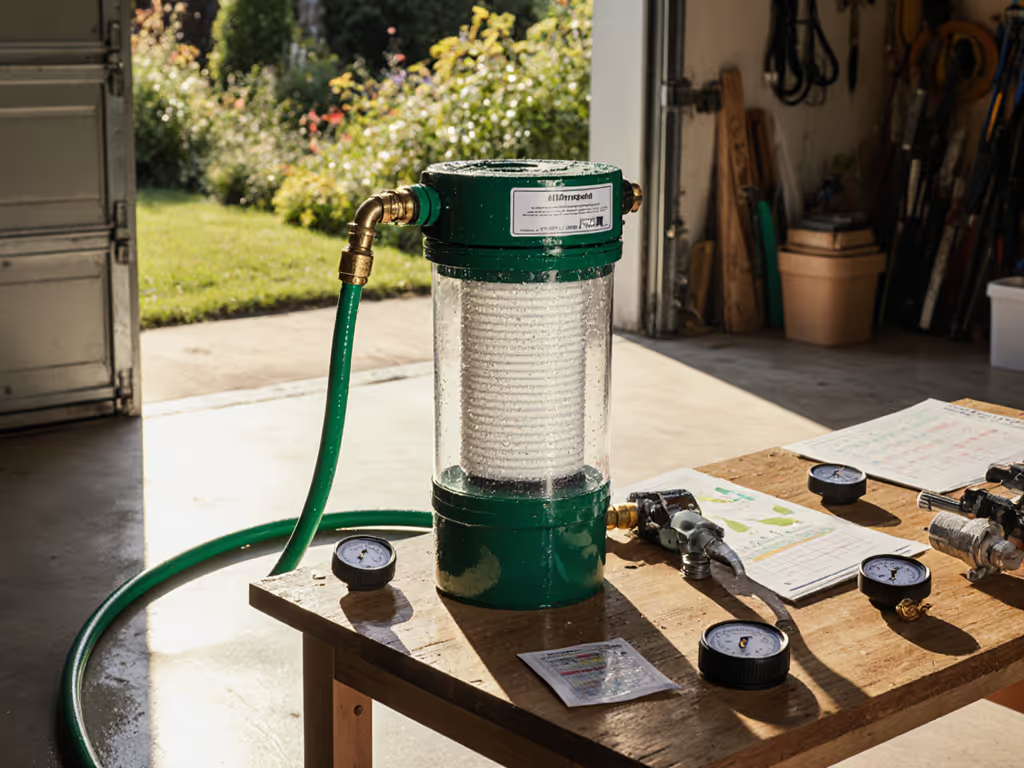
- In-line filters and pressure regulators When you must run a regulator, pick one with a bypass or drain and consistent output—see our garden hose pressure regulators test results.
An effective drain-down protocol requires:
- Positive slope (minimum 1" per 10') from spigot to terminus
- Quick-drain couplers at all connection points
- Manual or automatic air vents at high points
- Verification of complete drainage (test by squeezing)
This isn't seasonal maintenance; it is fundamental system design. When I implemented this approach after a rental property suffered $1,200 in freeze damage from a supposedly "all-weather" hose, the subsequent winter showed zero failures despite temperatures reaching -28°F. The difference wasn't just the hose, it was the integrated climate-aware system.
Which Specifications Matter Most for Ranch Applications?
For poultry coop water hose and ranch applications, prioritize these specifications in order:
- Material Flexibility at Minimum Expected Temperature (not just "cold weather rated")
- Burst Strength to Elongation Ratio (must exceed 20:1 at target temperature)
- Connection Drainage Engineering (slope, venting, coupling material)
- UV Resistance Rating (critical for year-round outdoor use)
- Weight-to-Durability Index (light enough for daily handling but robust enough for equipment contact)
Ranch applications demand consideration of additional factors:
- Chemical resistance to cleaning agents in poultry coops
- Abrasion tolerance against animal contact and equipment
- Potable water certification for livestock consumption
- Kink resistance at critical angles (around coop corners, through fence gaps)
What About Heated Hoses as a Solution?
While electrically heated hoses solve the freeze problem, they introduce other concerns:
- Energy consumption: A 40W heated hose left on winter-long costs approximately $35 in electricity
- Failure cascades: Power interruption creates immediate freeze risk
- Code compliance issues: Most aren't rated for direct burial or permanent installation
- Complexity: Require GFCI protection and weatherproof outlets
For most ranch applications, passive freeze-resistant designs provide more reliable, code-compliant solutions. The exception is critical livestock watering where continuous operation is essential, and a heated hose with battery backup may be justified despite the operational complexity.
Final Verdict: Selecting Your Climate-Appropriate Ranch Hose
The most durable ranch hose isn't defined by raw specs alone, it is the system that integrates properly with your climate metrics and usage patterns. For properties experiencing regular freeze-thaw cycles:
- Choose traditional rubber over PVC or polyurethane for true molecular flexibility at temperature extremes
- Verify actual low-temperature performance data, not marketing claims
- Implement proper drain-down protocol as part of your system design
- Prioritize connection engineering as much as hose body specifications
The Goodyear Maxlite emerges as the top all-around solution for ranch applications due to its verified -40°F performance, 400+ PSI burst strength with proper elongation characteristics, and integrated drainage features. Its lead-free compliance ensures safety for poultry coop water hose applications, while the weight-to-durability ratio makes daily handling practical.
For truly sustainable water management, remember: the most durable hose is the one that never fails. Climate-aware design prevents breakage and saves water, fines, and frustration. When your watering hose becomes part of your property's infrastructure rather than a seasonal vulnerability, you have achieved the ultimate efficiency, system reliability measured not in seasons survived, but in maintenance hours eliminated.
Choose engineering over marketing, integrate proper drain-down protocol from the start, and build for your climate. When you do, leaks stop before they start.
Related Articles