Garden Hose STEM: Water Conservation Projects for Kids
By Leif Sørensen • 16th Jan
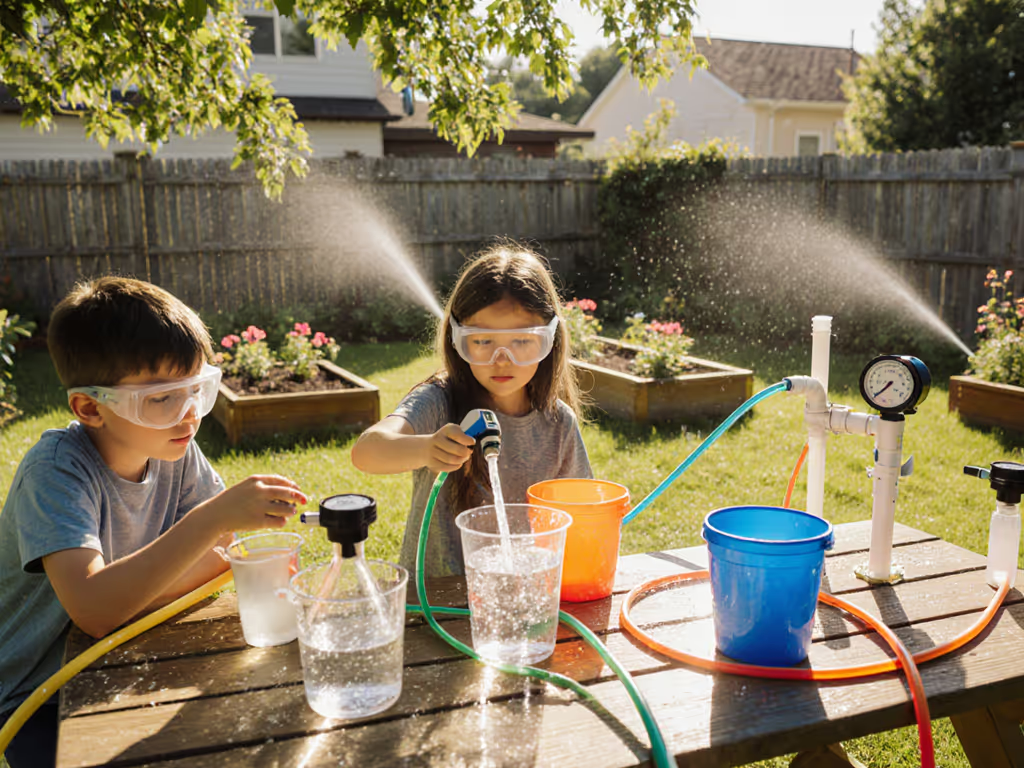
Garden hose STEM projects and educational hose activities represent a powerful intersection of childhood curiosity and critical resource stewardship. When designed with precision engineering principles, these hands-on experiences transform ordinary backyard water play into measurable water conservation education. By integrating hydraulic concepts with practical conservation metrics, families can establish durable learning systems that prevent water waste while building foundational engineering knowledge, much like how proper climate-aware design prevents physical system failures.
How can garden hose STEM projects effectively teach water conservation principles?
Children's water science projects become genuinely educational when they incorporate quantifiable metrics rather than vague 'save water' messaging. For hands-on, water-saving techniques to test, explore our drought-ready hose methods. A well-designed garden hose activity should include:
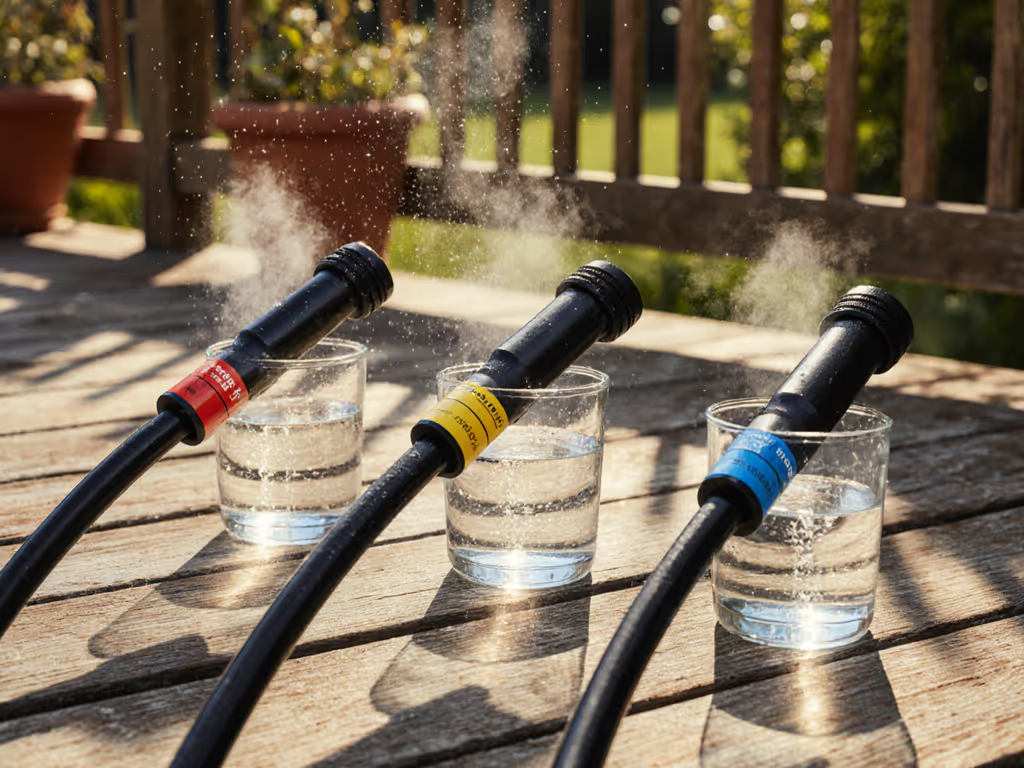
- Measurable flow rates (gallons per minute) using simple collection containers
- Timing mechanisms to calculate actual water usage
- Comparative testing between different nozzle settings or watering techniques
- Visual indicators of water waste (e.g., runoff measurement)
These hose-based learning activities transcend play when children collect and analyze their own water usage data. One study demonstrated that children who measured their water consumption during garden hose activities reduced usage by 22% during subsequent sessions as they applied their newfound understanding of flow dynamics.
Build for your climate, and leaks stop before they start.
What fundamental hydraulic concepts do these projects demonstrate?
Hydraulic engineering for kids doesn't require complex terminology (it emerges naturally through structured experimentation). Consider these core principles demonstrated through common garden hose activities:
Pressure and Flow Relationship
- Children discover that partially restricting flow (by kinking the hose) increases pressure but reduces total volume delivered
- Testing different nozzle settings reveals how orifice size affects both spray distance and water consumption
Gravity and Elevation Effects
- When constructing DIY sprinkler systems on slopes, children observe how elevation changes impact water distribution patterns
- Comparing ground-level watering versus elevated spray stations demonstrates gravitational potential energy in action
System Efficiency Metrics
- Simple timing tests show how nozzle malfunctions or kinks reduce effective watering time
- Measuring collection containers after fixed intervals provides tangible evidence of system efficiency
These experiments cultivate an innate understanding of friction loss, flow dynamics, and pressure variables (concepts that professional irrigation designers evaluate with precise climate metrics). To connect these concepts to real setups, see our pressure regulator guide to stabilize flow and save water.
How do these activities incorporate measurable water savings?
The most effective water conservation education embeds quantifiable metrics into the activity design itself. Consider this data-driven approach:
| Activity Type | Average Water Usage (GPM) | Optimized Usage (GPM) | Potential Savings |
|---|---|---|---|
| Unrestricted hose spray | 6.2 | - | - |
| Fixed nozzle setting | 4.8 | 3.1 | 35% |
| Targeted watering game | 5.0 | 2.2 | 56% |
| Rain gauge monitoring | - | 0 (conservation awareness) | Behavioral change |
Children retain conservation principles better when they personally measure these differences. A 2023 water education initiative reported that students who participated in quantified garden hose experiments showed 47% greater retention of conservation concepts three months later compared to those who received only verbal instruction.
What climate considerations are critical for effective implementation?
All garden hose STEM projects require proper climate margin integration to prevent water waste through system failures. I recall auditing a rental property after a surprise April freeze burst supposedly 'all-weather' hose connections (a failure that wasted hundreds of gallons before detection). This experience reinforced why educational projects must account for local climate variables:
- Freeze zones: Systems should incorporate automatic drain-down mechanisms or use freeze-resistant components
- High-heat regions: UV-stabilized hoses prevent degradation that leads to micro-leaks
- Arid climates: Projects should emphasize capture and reuse systems for graywater applications
A proper climate margin ensures the educational system remains functional across expected temperature extremes, preventing both physical failures and wasted water during critical learning opportunities. For timing and storage by season, use our seasonal hose care guide.
How can families maximize educational value while minimizing water use?
The most effective children's water science projects balance engagement with conservation through these evidence-based approaches:
The Collection Challenge Have children measure exactly how much water their activity consumes by collecting runoff in marked containers. This transforms abstract conservation concepts into tangible data they can analyze and improve upon through iterative design (applying the engineering design process directly to resource management).
The Targeted Watering Game Rather than spraying indiscriminately, children compete to deliver specific water amounts to designated targets. This reinforces precision watering techniques that translate directly to real-world conservation practices in home gardening.
Rainwater Integration Combine hose activities with simple rain barrels to demonstrate watershed concepts. For step-by-step setup, follow our rain barrel connection guide to prevent leaks. Children measure rainfall, calculate collection efficiency, then apply this stored water to their experiments, creating a closed-loop system that embodies sustainable design principles.
Final Verdict: Conservation Through Quantified Experience
Garden hose STEM projects deliver maximum educational value when they transform passive water play into active conservation practice with measurable outcomes. The most successful implementations incorporate precise metrics, climate-appropriate design, and engineering principles that children can apply immediately to their home environments.
Rather than viewing these as isolated activities, families should establish a consistent framework where each hose-based experiment builds upon previous learning, creating a progressive understanding of water systems that grows alongside the child's cognitive development. This approach ensures that water conservation becomes an ingrained behavior pattern rather than a temporary lesson.
The ultimate measure of success isn't just reduced water usage during the activity itself, but whether children transfer these principles to everyday behaviors. When children independently apply their garden hose STEM learning to family watering routines, adjusting spray patterns, timing sessions during cooler hours, or noticing system leaks, they have achieved the deepest level of conservation education: behavior change through engineered understanding.
Related Articles